
Dietes robinsoniana
Dietes robinsoniana (F. Muell.) Klatt
Description
Growing requirements
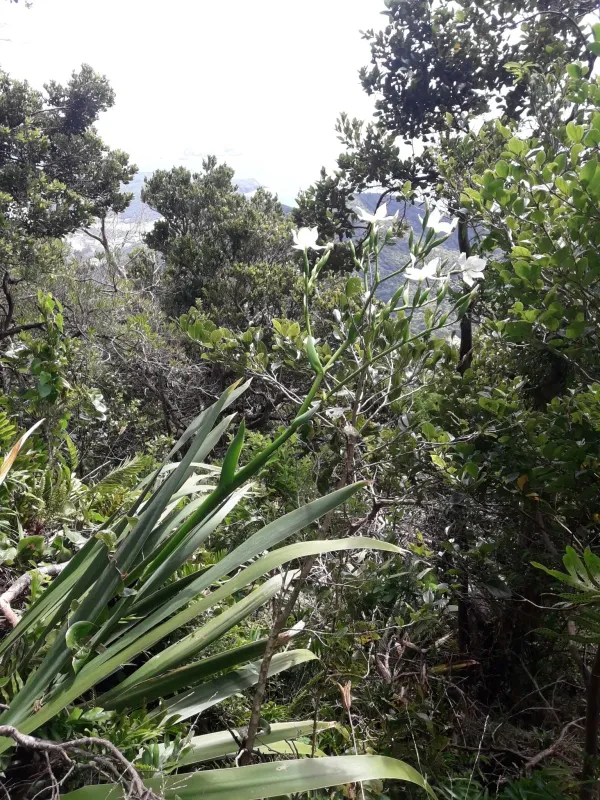
Dietes robinsoniana, commonly known as the Lord Howe Island Iris, is a robust perennial plant belonging to the Iridaceae family. It is endemic to Lord Howe Island, where it thrives in moist, sheltered forest environments.
The plant features large, sword-shaped evergreen leaves arranged in fans, growing from underground rhizomes. It produces tall flower spikes topped with striking white, iris-like flowers that exhibit prominent yellow nectar guides.
This species prefers rich, well-draining soil and benefits from partial shade to full sun exposure, depending on the intensity of the regional summer heat. Adequate hydration is crucial, although it can tolerate short periods of dryness once established.
Regarding climate, Dietes robinsoniana is best suited for subtropical and mild temperate regions. It is relatively frost-tolerant but requires protection from severe cold weather to prevent damage to the foliage and root system.
In landscaping, this plant is highly valued for its architectural form and ability to create dense, low-maintenance screens. It serves as an excellent choice for modern garden designs or as a feature plant in tropical-style garden beds.
Main diseases and pests
This plant is generally robust and suffers few issues when grown in suitable environmental conditions. The most significant threat is root rot caused by poor soil drainage and waterlogging.
Pests such as mealybugs can occasionally nest within the tight leaf bases, particularly if the plant is stressed by insufficient airflow or improper humidity levels.
During the flowering season, slugs and snails may target the succulent parts of the flower stalks, necessitating manual removal or organic deterrents if damage becomes significant.
Foliar spot diseases are rare but can occur in stagnant, overly humid conditions. Providing space for air circulation around each clump is the most effective preventative measure.
Regular maintenance, including the removal of dead or spent leaves and yellowing foliage, helps minimize the accumulation of debris that can harbor pests and pathogens.