
Dietes bicolor
Dietes bicolor (Steud.) Sweet ex Klatt
Description
Growing requirements
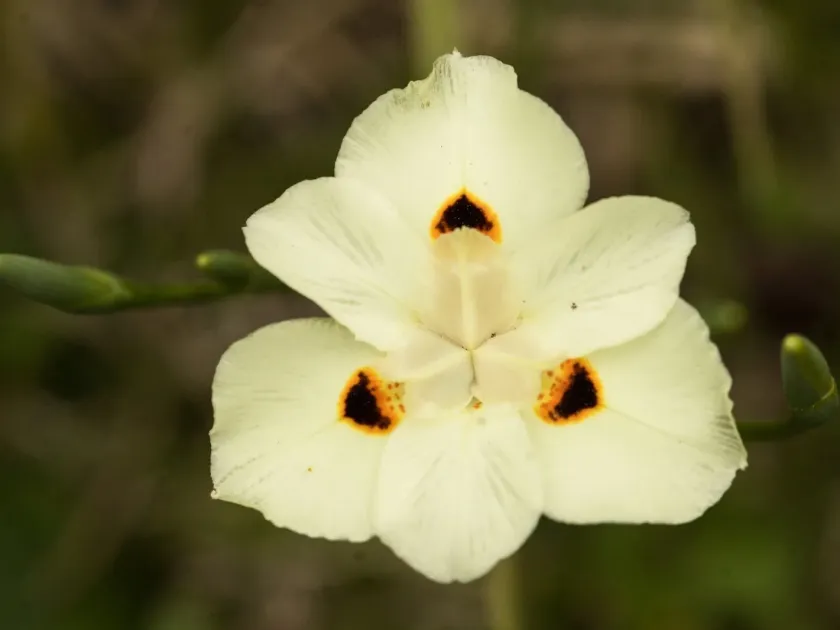
Dietes bicolor, commonly known as the African iris or Fortnight lily, is a rhizomatous perennial belonging to the Iridaceae family. It originates from South Africa and is highly valued for its elegant, cream-colored flowers with dark brown spots on the falls.
Botanically, it forms dense clumps of sword-shaped leaves that remain green year-round. The plant's structure allows it to adapt to various environmental conditions, including moderate drought, once established in the garden landscape.
Climate requirements include sunny to partially shaded exposure. While it tolerates a range of temperatures, it thrives in warm climates and requires protection from hard frosts, which can damage the foliage significantly.
Regarding soil, it prefers well-draining loamy soils with a balanced pH. Although it can grow in various soil types, providing organic compost during the spring growing season significantly improves the bloom frequency and overall plant vitality.
In landscaping, Dietes bicolor serves as an excellent ground cover, border plant, or focal point in Mediterranean-style gardens. It is also suitable for container gardening, providing a structural element in patio designs.
Main diseases and pests
The primary threats to Dietes bicolor include fungal diseases such as root rot, which are triggered by waterlogged soil conditions. Ensuring proper drainage is the most effective preventative measure for this species.
Insect pests, specifically spider mites and thrips, can cause leaf chlorosis and disfigurement. Regular inspection of the foliage is necessary to detect early infestations before they spread across the clump.
Leaf spot diseases may appear during seasons with high humidity and poor air circulation. Removing affected foliage helps manage the spread of fungal spores and improves the aesthetic appeal of the planting.
Slugs and snails may target the tender base of the plant, especially after rainfall. Applying a physical barrier, such as gravel or crushed shells, around the base can help reduce these issues.
Maintaining a clean growing area and avoiding overcrowding by dividing overgrown clumps every few years will significantly reduce the risk of pests and disease colonization.