
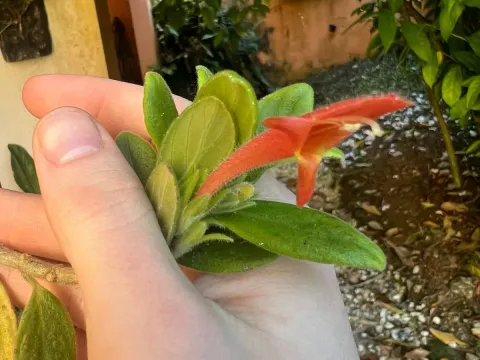
Columnea
Columnea L.
Columnea (Columnea L.) is a genus of flowering plants in the Gesneriaceae family, natively found in the tropical regions of Central and South America. These plants are primarily epiphytic, meaning they grow on the branches of trees in the rainforest canopy, adapting to high humidity levels.
What the section contains

Columnea
Cultivation requires bright, indirect light to ensure healthy foliage and prolific blooming. Direct sunlight should be strictly avoided during peak hours, as it can severely scorch the succulent-like leaves and weaken the overall structure of the hanging stems.
The ideal temperature for Columnea ranges from 20 to 25 degrees Celsius. It is crucial to maintain a warm environment throughout the year, as the plant is highly sensitive to cold drafts and sudden drops in temperature, which can cause leaf drop and shock.
A well-draining, airy potting medium is essential for Columnea health. The best mixtures include a base of peat moss, pine bark, perlite, and charcoal to provide adequate aeration. This prevents the medium from compacting, which is critical for healthy root development.
Watering should be performed consistently, ensuring the potting mix stays moist but never waterlogged. The plant benefits from high humidity, which can be achieved through regular misting or by placing the pot on a tray with damp pebbles to create a microclimate.
Columnea is susceptible to various pests, including aphids, mealybugs, and spider mites, which thrive in low-humidity conditions. Regular monitoring of the foliage, especially the undersides of leaves, is necessary for early detection and effective intervention.
Fungal issues, such as grey mold (Botrytis) and various root rots, are common if air circulation is poor or if the soil remains constantly soggy. Preventive measures include ensuring good ventilation and removing any decaying plant material immediately to prevent the spread of disease.