
Columnea scandens
Columnea scandens
Description
Growing requirements
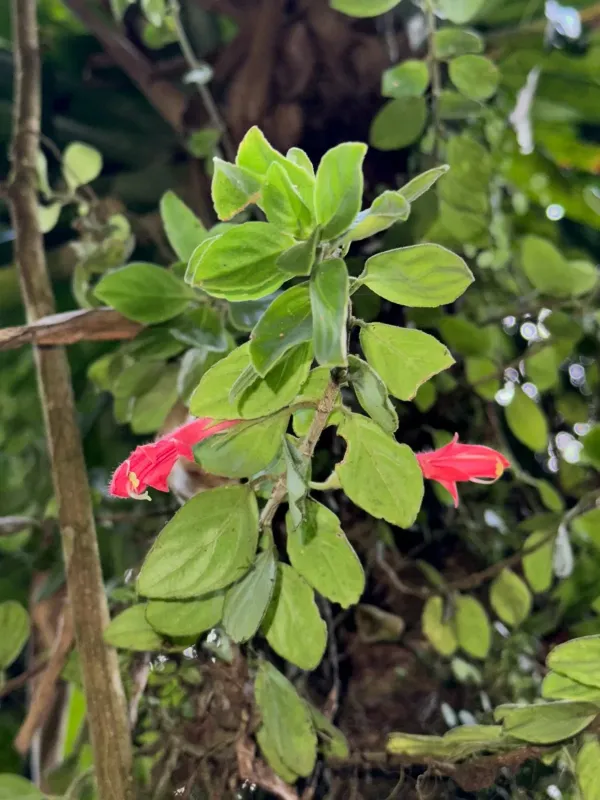
Columnea scandens is a distinctive member of the Gesneriaceae family, recognized for its cascading, evergreen habit. This species is native to the tropical forests of Central and South America and the Caribbean, where it grows primarily as an epiphyte on tree branches.
The plant thrives under bright, filtered light conditions. Direct sunlight is generally too intense and can scorch the foliage, while insufficient light leads to leggy, weak stems and a significant reduction in the number of blooms produced during the flowering cycle.
Ideal temperatures for growth fall between +20°C and +25°C. Stability is crucial for this culture; cold drafts or rapid fluctuations in ambient temperature can cause leaf drop and stress the plant, hindering its ability to recover after periods of dormancy.
Regarding soil requirements, Columnea scandens needs a loose, well-draining, and slightly acidic medium. A mixture consisting of peat moss, perlite, and coarse bark is recommended to ensure the aeration of the root system and to prevent the buildup of moisture.
High relative humidity is essential for the health of this species. Maintaining a humidity level of 60% or higher is recommended to mimic its native environment, which is achieved through regular misting or the use of pebble trays filled with water to increase localized vapor.
Main diseases and pests
Root rot is the most serious threat caused by overwatering or using a growing medium that lacks adequate drainage. When the roots are constantly waterlogged, oxygen depletion occurs, leading to the rapid decay of the entire plant system and eventual death.
Spider mites are common pests that thrive in dry indoor air. These tiny organisms puncture the leaf tissue, causing visible speckling and chlorosis. Increasing humidity and washing the foliage regularly are effective methods to manage and prevent mite infestations.
Aphids can target new vegetative growth and developing flower buds. These insects weaken the plant by feeding on its sap, which often leads to distorted leaves. Application of horticultural soaps or systemic insecticides is usually sufficient to control a localized aphid population.
Mealybugs are also problematic, often hiding in the dense foliage or leaf axils where they leave cottony residues. They reproduce rapidly and can quickly compromise the plant's health, necessitating mechanical removal followed by a thorough application of pest control products.
Consistent monitoring and proper environmental management are the cornerstones of disease prevention. By ensuring adequate airflow and avoiding the overhead wetting of foliage, gardeners can significantly reduce the incidence of fungal and bacterial infections in this crop.