
Wallisia cyanea
Wallisia cyanea
Description
Growing requirements
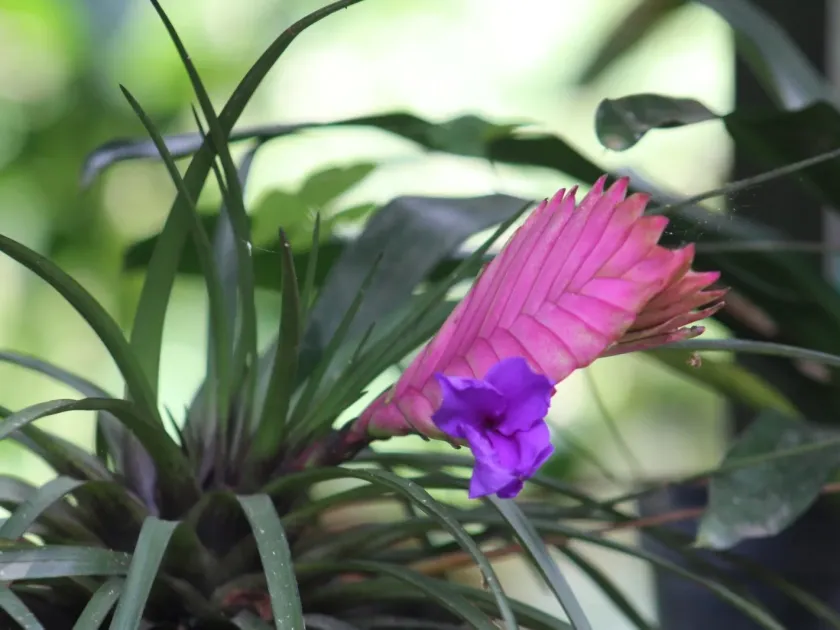
Wallisia cyanea, formerly classified within the Tillandsia genus, is a distinguished member of the Bromeliaceae family. Originating from the tropical rainforests of Ecuador and Peru, this species is well-known for its adaptation as an epiphyte, utilizing its root system primarily for anchorage rather than nutrient uptake.
The climate requirements for this culture are specific, demanding high humidity levels of 60% or more and a stable temperature range between 18°C and 25°C. Excessive exposure to cold drafts or heat stress can cause immediate physiological disruption to the plant's growth cycle and flowering potential.
Regarding soil composition, Wallisia cyanea necessitates a coarse, highly aerated growing medium. A specialized mix consisting of pine bark, perlite, and dried sphagnum moss is recommended to ensure adequate gas exchange at the root zone and to prevent the substrate from becoming waterlogged.
Effective agrotechnical practices involve careful watering, which should be directed into the central leaf rosette where the plant absorbs moisture. Consistent, indirect light is vital for the development of its signature blue, fan-shaped bracts, ensuring the plant maintains its aesthetic vigor throughout the season.
In terms of economic and practical utility, Wallisia cyanea is widely utilized in the commercial ornamental plant industry. Its unique morphological traits make it a staple in greenhouse production and interior landscaping, providing high decorative value due to its long-lasting, fragrant blue inflorescences.
Main diseases and pests
Typical pest threats to this crop include spider mites and mealybugs, which thrive in indoor environments with suboptimal humidity levels. These pests can rapidly compromise the integrity of the leaf tissues, leading to stunted growth and the potential transmission of secondary viral or fungal infections.
Fungal issues, particularly stem rot and root rot, are the most frequent health hazards for this plant. These diseases are almost exclusively linked to poor drainage or incorrect irrigation, which allows excess moisture to settle at the base of the plant, promoting anaerobic conditions for pathogen development.