
Wallisia lindeniana
Wallisia lindeniana
Description
Growing requirements
Wallisia lindeniana (Wallisia lindeniana), formerly classified as a Tillandsia, belongs to the Bromeliaceae family. It is an epiphytic or semi-epiphytic perennial plant that naturally occurs in the tropical forests of Ecuador and Peru, preferring humid and shaded habitats.
To successfully cultivate the plant, it is necessary to maintain a stable temperature range of 20–25°C. Wallisia is highly sensitive to sudden temperature fluctuations and drafts, which can cause premature wilting of inflorescences and leaf drop.
The crop requires high humidity (60% or more). In greenhouse conditions, regular misting with soft, settled water is recommended, while avoiding water accumulation directly on the inflorescence to prevent rot processes.
The potting soil must be loose, well-aerated, and slightly acidic. Substrates based on conifer bark, peat, and charcoal are ideal as they ensure proper drainage and prevent moisture stagnation around the roots.
The plant needs bright but indirect lighting. Direct sunlight during midday hours can cause burns on the leaf blades, so placement on west or east-facing windows with additional shading is considered optimal.
Yield
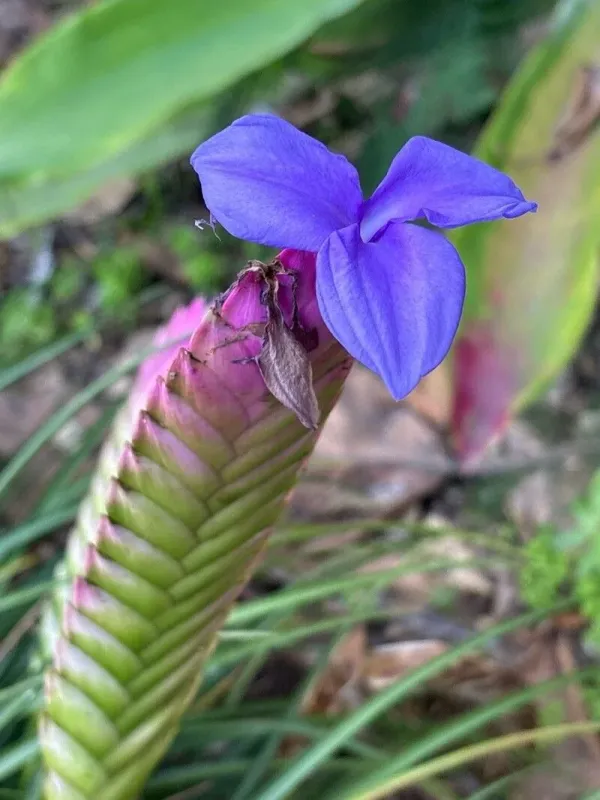
The agricultural use of Wallisia is limited to ornamental floriculture and landscape design in conservatories. The crop is valued for its spectacular blue-violet petals and vibrant pink bracts, which maintain their decorative appeal for several months.
Propagation for agricultural purposes is carried out primarily through vegetative methods, by separating the daughter rosettes that form at the base of the mother plant after the flowering period.
In commercial production, it is crucial to adhere to fertilizer cycles. Specialized fertilizers for bromeliads with low nitrogen content are used and applied at half-strength during the active growth phase.
The yield potential of the plant is determined by the quality of the bract development. Experienced agronomists achieve flowering 2–3 years after separation of the offset by strictly maintaining supplemental lighting regimes and temperature control.
The crop is not categorized as a food or industrial plant, yet it holds significant aesthetic value for collectors of exotic flora and suppliers of potted ornamental crops.
Main diseases and pests
The primary threats to the plant are sap-sucking pests such as mealybugs and scale insects, which often hide in leaf axils, making their detection on early stages of infestation difficult.
Overwatering or water stagnation in the leaf rosette leads to the development of fungal infections, including fusarium and various types of rot, which often result in the death of the entire root system.
Spider mites can attack the plant under conditions of low humidity and high temperature. Upon detecting the first signs of webbing, treatment with systemic acaricides is required.
To prevent diseases, it is necessary to follow a strict watering schedule and provide adequate room ventilation, preventing air stagnation around the leaf rosettes.
When using chemical protection agents, it is vital to strictly observe the recommended concentration, as the delicate tissues of bromeliad leaves can react negatively to aggressive pesticide components.