
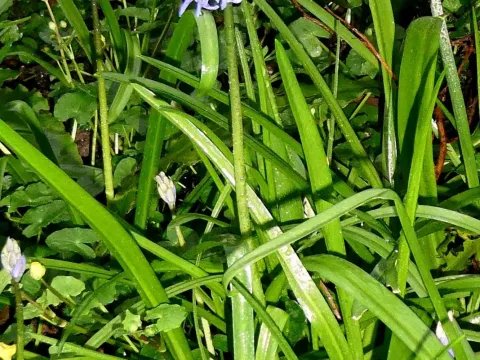
Hyacinthoides
Hyacinthoides Heist. ex Fabr.
Planting of Hyacinthoides should ideally take place in the autumn, between late August and early October, allowing bulbs to establish roots before the soil freezes.
What the section contains

Hyacinthoides
The bulbs should be planted at a depth of 8 to 12 centimeters, ensuring they are deep enough to remain stable and protected from extreme temperature fluctuations.
A spacing of 10 to 15 centimeters between individual bulbs is recommended to provide sufficient room for the plant to spread and produce offsets over time.
Seed propagation is possible, though it requires patience as the plants typically take three to four years to reach their full flowering maturity.
Choose a planting site with dappled shade, as the intense midday sun can cause the flowers to wilt prematurely and significantly reduce the bloom duration.
The species thrives in loose, humus-rich soil that offers excellent drainage to prevent the accumulation of excess moisture, which can cause bulb rot.
A soil pH ranging from slightly acidic to neutral is optimal, supporting nutrient uptake and providing a healthy environment for root development.
Hyacinthoides is quite hardy, but in colder regions with little snow cover, applying a layer of organic mulch helps protect the bulbs from deep frost.
Maintaining consistent soil moisture during the growing season is crucial, especially during the active growth phase when the plant is forming its floral buds.
These plants are naturally adapted to woodland environments and benefit from growing near deciduous trees, which provide both shade and leaf mold enrichment.
Fungal diseases such as botrytis and fusarium are the primary threats, particularly in poorly drained soils or areas with excessive humidity throughout the season.
Pests, including bulb mites and nematodes, can damage the root system and bulb tissue, severely hindering the plant's growth and overall vigor.
Stressed plants are more susceptible to infestations, so maintaining proper cultivation practices is key to building natural resistance against these pests.
Preventative measures include dusting bulbs with a suitable fungicide before planting and ensuring proper airflow between plants in the garden bed.
If an infestation is detected, infected plants should be carefully excavated and destroyed to prevent the spread of diseases or pests to healthy bulbs.
The best time to lift and divide bulbs is during the dormant period in mid-summer, once the foliage has turned yellow and withered naturally.
After excavation, the bulbs should be cleaned of soil and air-dried in a shaded, well-ventilated location to ensure they are moisture-free before storage.
Carefully separate any offsets from the parent bulbs and discard any specimens that show signs of decay or damage to protect the quality of your stock.
Store the cleaned bulbs in a cool, dry place with good ventilation until you are ready to replant them in the garden during the autumn season.
When left undisturbed, Hyacinthoides can thrive in the same location for up to five years before requiring thinning to maintain optimal flowering density.