
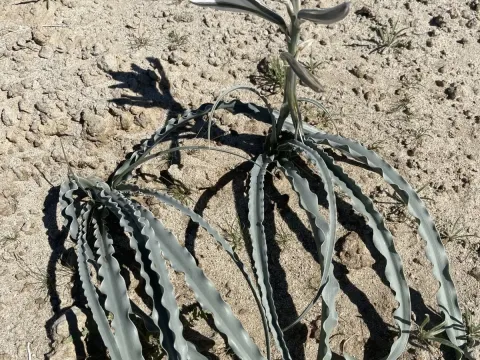
Hesperocallis
Hesperocallis
Hesperocallis (Hesperocallis undulata), commonly referred to as the desert lily, is a monotypic genus in the family Asparagaceae. This herbaceous perennial is highly specialized for life in arid environments, reflecting a unique evolutionary adaptation.
What the section contains

Hesperocallis
Native to the deserts of the southwestern United States and northwestern Mexico, including the Mojave and Sonoran deserts, this plant is well-adapted to extreme thermal fluctuations and minimal seasonal rainfall.
Morphologically, the plant is characterized by a large bulb that serves as a storage organ. The foliage is noted for its undulated margins, and the plant produces a tall, sturdy inflorescence with fragrant, white, lily-like flowers during the blooming season.
Optimal growth requires well-draining, sandy soils and full sun exposure. In agricultural or horticultural settings, mimicking its natural habitat is crucial, as the plant cannot tolerate waterlogged conditions during its dormant period.
Its primary utilization is in xeriscaping and dry-garden landscaping. Researchers are exploring its potential as a sustainable ornamental crop due to its naturally low water requirements and high resistance to drought conditions.
The most significant threat to the health of Hesperocallis is the development of bulb rot and fungal infections triggered by excessive soil moisture and poor drainage. These pathogens can quickly destroy the root system.
Various pests, including bulb-boring insects and nematodes, can damage the plant's structural integrity. Small mammals that feed on bulbs in their natural habitat also present a risk to wild populations and garden specimens.
Weed interference is a critical factor during the establishment phase, as the plant grows relatively slowly and cannot compete with aggressive invasive weeds for nutrients or space.
Environmental stress, particularly sudden changes in soil temperature during the winter, can weaken the plant's resistance, making it more susceptible to opportunistic soil-borne pathogens.
Integrated pest management strategies focusing on cultural control—such as optimizing moisture levels and maintaining sanitary soil conditions—are essential for preserving plant health in cultivation.