
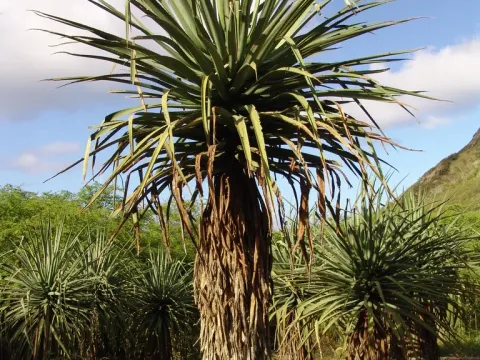
Furcraea
Furcraea
Furcraea is primarily propagated through vegetative methods, as seed production is not a reliable way to ensure uniform crop development.
What the section contains

Furcraea
The most common propagation technique involves planting bulbils, which are small plantlets produced in large numbers on the inflorescence after the plant flowers.
These bulbils are placed in nurseries where they receive partial shade and consistent moisture to stimulate rapid root development and establishment.
Planting out in the field is ideally timed to coincide with the onset of the rainy season to minimize plant stress and ensure high survival rates.
In large-scale farming, spacing is meticulously planned to facilitate future mechanical weed control and harvesting operations between the rows.
Belonging to the Asparagaceae family, Furcraea is a robust succulent that thrives in warm, tropical, and subtropical climates across the globe.
The plant requires well-draining, loose soil because it is highly sensitive to waterlogged conditions, which often cause terminal root decay.
Ideal growth temperatures range from 20 to 30 degrees Celsius, and the plant must be protected from even slight frosts to survive and produce fiber.
While tolerant of intense sunlight, Furcraea benefits from adequate rainfall or supplementary irrigation to support the rapid growth of its long, fibrous leaves.
The species naturally originates from Central and South America, and it requires consistent ambient humidity to maintain optimal metabolic activity.
Furcraea is grown primarily for its long, strong, and durable fibers, which are highly valued in the textile and rope-making industries worldwide.
Mature plantations can yield significant amounts of biomass, typically ranging from 10 to 15 metric tons of fresh leaves per hectare annually.
The extraction efficiency of fibers from the leaf mass is typically between 2% and 4% depending on the specific species and processing technology used.
Harvesting usually commences once the plants are 3 to 4 years old, at which point the leaves have reached their commercial fiber-accumulating length.
With proper management, a single plant can provide a sustainable harvest of leaves for several years, ensuring consistent productivity for the farmer.
While Furcraea is generally resistant to many pests, it is vulnerable to soil-borne pathogens and specific environmental stressors in intensive systems.
Root-knot nematodes are considered one of the primary threats, as they significantly reduce the plant's vigor and can lead to stunted growth.
Fungal infections, particularly those causing leaf spot or crown rot, often manifest in areas with poor air circulation or excessive soil moisture.
Effective management includes implementing integrated pest control, ensuring proper drainage, and avoiding the introduction of infected plant stock.
Sanitation practices, such as the removal of decayed tissue, are essential to maintain the health of the entire plantation and prevent epidemic outbreaks.
Harvesting is performed by manually or mechanically removing the oldest, outer leaves from the base of the plant rosette without damaging the center.
Immediate processing is critical, as harvested leaves should undergo decortication within a day to prevent fiber degradation caused by fermentation.
Decortication machines are used to crush the leaf tissue and extract the fibers, which are then thoroughly washed to remove impurities and sap.
After washing, the fibers are sun-dried, a process that ensures the material is stable, moisture-free, and ready for industrial spinning or weaving.
Proper harvest logistics, including field-side processing facilities, significantly enhance the quality of the end-product and increase overall profitability.