
Furcraea selloana
Furcraea selloana
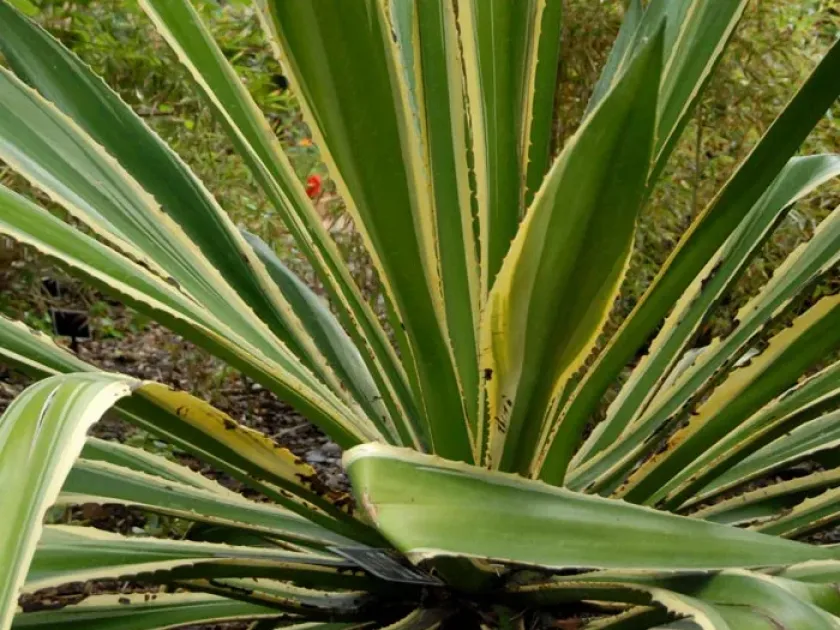
Description
Growing requirements
Furcraea selloana is a robust perennial succulent belonging to the Asparagaceae family, native to South America. It is recognized for its large, sword-shaped leaves arranged in a dense, rosetted form, which store moisture to survive in arid environments.
Botanically, the plant is distinguished by its fibrous leaves, which often possess sharp marginal spines. A notable feature is its impressive, tall inflorescence that can reach several meters in height, marking the transition into the reproductive phase of its lifecycle.
The plant thrives in well-drained, sandy, or rocky soil types. Proper soil aeration is essential, as waterlogged conditions quickly lead to root rot and systemic failure of the plant. It prefers open, sunny locations to ensure vigorous development and maximum leaf fiber production.
Regarding climate, Furcraea selloana requires warm conditions and is intolerant of frost. It is best suited for tropical and subtropical zones where high levels of solar radiation promote consistent vegetative growth and high-quality fiber yield.
Industrially, this crop is valued primarily for its strong, durable fiber. Extracted from the long leaves, this material is highly resistant to saline water, making it a preferred choice for the manufacturing of maritime ropes, mats, and various types of industrial cordage.
Main diseases and pests
The primary threats to Furcraea selloana include fungal infections, which are often exacerbated by high humidity and poor ventilation within the plantation. Excessive moisture leads to root necrosis and leaf decay, significantly lowering the quality of the raw material.
Insect pests, particularly mealybugs and spider mites, pose a major threat by feeding on the tender tissues of the leaves. Infestations lead to stunted growth and increase the susceptibility of the plant to secondary bacterial and fungal pathogens.
To maintain plant health, it is essential to manage weed growth during the early stages of development. Weeds compete for nutrients and create an environment that traps excess moisture, facilitating the spread of pests and diseases across the rows.
Implementation of regular phytosanitary inspections is necessary for the early detection of localized outbreaks. Pruning diseased foliage and ensuring proper spacing between plants significantly mitigates the risk of rapid disease transmission.
Integrated pest management strategies are recommended to balance chemical control with environmental safety. Since the fiber is processed for various consumer uses, any pesticides applied must be used in accordance with strictly defined safety protocols to protect workers and the end product.