
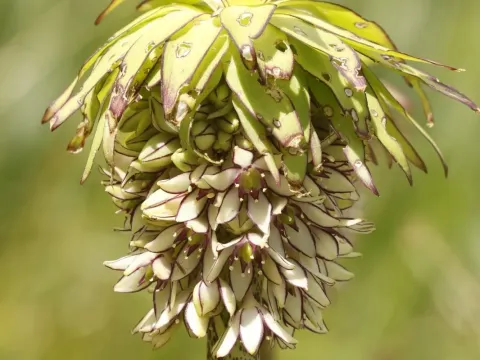
Eucomis
Eucomis L’Her.
Eucomis (Eucomis L’Her.), commonly known as pineapple lily, belongs to the Asparagaceae family and is a popular bulbous perennial. Planting should be carried out in spring once the danger of frost has passed and the soil has sufficiently warmed up.
What the section contains


Eucomis
In warmer climates, bulbs can be planted directly into the ground at a depth of 5 to 10 centimeters, depending on the bulb size. In colder regions, starting them in pots allows for an earlier growing season and better establishment before transplanting.
When propagating by seed, sowing is typically done in late winter in a greenhouse. Seeds require consistent warmth and moisture to germinate, and seedlings should be carefully hardened off before being moved to their final outdoor positions.
Proper spacing is crucial for healthy development; a distance of 20 to 30 centimeters between bulbs ensures adequate airflow and prevents competition for sunlight. Good drainage at the base of the planting hole is essential to prevent bulb rot.
Choosing a site with full sun is vital for the plant to reach its full potential. The structure of the bulb relies on energy stored during the previous season, so proper planting depth and timing are foundational for subsequent flowering performance.
Native to Southern Africa, Eucomis thrives in sunny, warm locations. Full sun exposure is necessary for the plant to develop its signature thick, fleshy leaves and the unique, pineapple-shaped flower spike that defines its aesthetic.
The soil must be fertile, well-draining, and rich in organic matter. While Eucomis is adaptable, it performs best in sandy or loamy soils with a neutral pH. Heavy clays should be amended with organic compost or sand to improve drainage characteristics.
Regular watering is required during the active growth phase, particularly as the flower spike emerges and begins to bloom. However, the soil should never remain waterlogged, as this rapidly leads to the decay of the bulb and roots.
Eucomis is not winter-hardy in colder climates and requires the bulbs to be lifted from the soil before the first hard frost. After cleaning, they should be stored in a cool, dry place at temperatures around 10-15 degrees Celsius.
Fertilization with a balanced liquid fertilizer during the active growing season encourages lush growth and vibrant flowers. Reducing fertilizer application once the flowers begin to fade helps the bulb redirect energy toward dormancy and storage.
Fungal diseases, such as botrytis and fusarium rot, are the most significant threats to Eucomis, especially when grown in poorly drained soils. Avoiding overhead irrigation can significantly reduce the incidence of these fungal infections.
Pests like spider mites can be an issue during dry, hot weather, causing discoloration and stippling on the leaves. Regular monitoring and the use of horticultural oils or appropriate acaricides can help manage these infestations effectively.
Slugs and snails are notorious for feeding on the foliage of emerging Eucomis plants. Implementing barriers or using organic-friendly baits can keep these mollusks away from the tender leaves of the young plants during the spring.
Inspection of the bulbs before planting and storage is a critical practice for integrated pest management. Removing any damaged or softened bulbs prevents the spread of rot throughout the storage container during the dormant winter period.
Maintaining proper hygiene by removing dead foliage and debris from the planting area helps reduce the overwintering population of pests and pathogens, contributing to a healthier environment for the upcoming season.
The harvesting of bulbs occurs in autumn once the foliage has naturally turned yellow and begun to die back. This indicates that the plant has ceased active growth and has successfully stored energy for the next cycle.
Bulbs should be carefully lifted with a garden fork, cleared of excess soil, and allowed to air-dry in a shaded, ventilated area for several days. Proper drying is essential to prevent moisture-related rot during storage.
When storing, place the bulbs in crates filled with dry peat or sand to regulate humidity levels. This protective layer helps prevent dehydration while keeping the environment dry enough to discourage any potential fungal growth.
Periodically checking the bulbs during storage allows for the removal of any specimens that show signs of decay. Early intervention saves the healthy portion of the stock and ensures a high success rate for the following year's planting.
For cut flower usage, the inflorescences should be harvested when the majority of the florets on the spike are open. They act as striking focal points in floral arrangements and maintain high durability when provided with fresh water.