
Furcraea macdougalii
Furcraea macdougalii
Description
Growing requirements
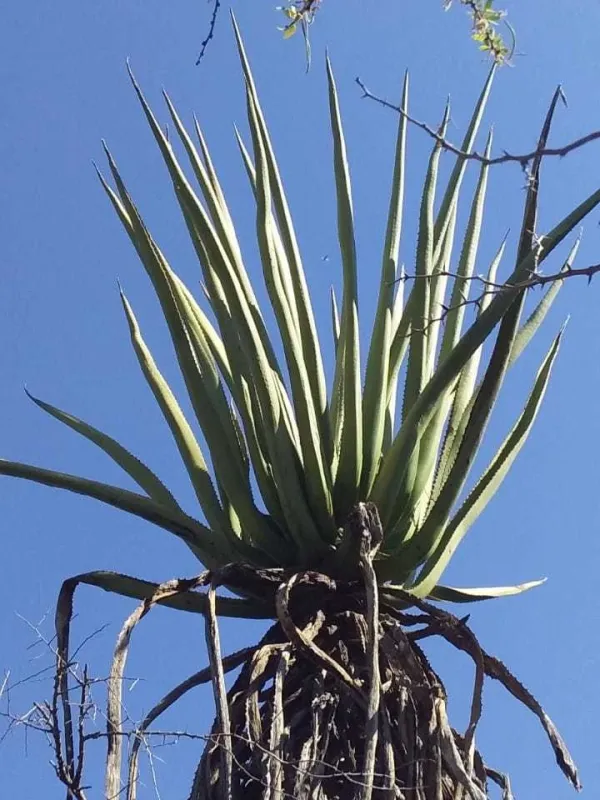
Furcraea macdougalii is a remarkable succulent species belonging to the Asparagaceae family. This plant is characterized by a massive, woody trunk and a wide rosette of rigid, sword-shaped leaves that can grow to impressive lengths.
The species originates from the dry, mountainous regions of Mexico, primarily found in the states of Oaxaca and Puebla. It is well-adapted to arid environments, making it a highly resilient candidate for cultivation in water-stressed regions.
The plant requires well-draining, sandy or gravelly soils. In agricultural practice, it is crucial to avoid any soil conditions that promote water retention, as the plant is extremely susceptible to root rot in saturated environments.
Temperature requirements are centered around warm, dry conditions. While it can withstand occasional minor temperature drops, it is not frost-hardy and requires a frost-free environment to maintain its growth cycle.
Propagation is primarily achieved via bulbils, which are small plantlets produced on the flowering stalk after the plant reaches maturity, ensuring efficient reproduction within a plantation setting.
Yield
The primary agricultural utility of Furcraea macdougalii lies in its fiber production. The leaves contain long, durable fibers that are extracted through a process called decortication, yielding material suitable for cordage and textile industries.
These fibers are highly valued for their high tensile strength and resistance to moisture, which is particularly beneficial for marine applications, such as the production of nautical ropes and nets.
Harvesting strategies involve selecting mature leaves while ensuring that the central growing point of the rosette remains intact to prolong the plant's life as long as possible before the final flowering stage.
Beyond fiber, the plant serves an architectural purpose in landscaping. Due to its striking stature and geometric symmetry, it is a preferred plant in xeriscaping and botanical garden designs across subtropical zones.
Research into the chemical constituents of the plant suggests potential secondary applications, including the extraction of sapogenins for the pharmaceutical industry, further increasing the value of this crop.
Main diseases and pests
The crop is prone to infestations by mealybugs and scale insects, which can weaken the plant's structural integrity. Furthermore, poor drainage typically leads to rapid colonization by various soil-borne pathogenic fungi.