
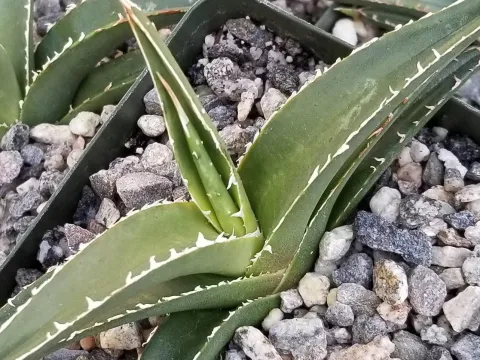
Triangular agave
Agave triangularis
Agave triangularis is a succulent plant belonging to the Asparagaceae family. It is characterized by its distinctively triangular-shaped, fleshy leaves that form a robust and symmetrical rosette over time.
What the section contains
Triangular agave
The species originates from the arid regions of Mexico, where it thrives in harsh environments. Its evolutionary adaptation allows it to store significant amounts of water, enabling it to withstand prolonged drought periods.
For optimal growth, this species requires a substrate that provides excellent drainage. Sandy or rocky soil mixes are ideal, as they mimic the natural conditions found in its native habitat and prevent root saturation.
The plant demands high light intensity throughout the year. If grown in low-light conditions, the agave may lose its compact shape, making it vulnerable to mechanical damage and reducing its overall structural integrity.
Cultivation practices focus on mimicking natural desert cycles. This involves moderate watering during the active growth season and maintaining a dry, cool environment during the dormant winter phase to ensure longevity.
Root rot is the most significant threat to the health of the plant. It is primarily caused by overwatering or soil mixes that fail to drain water efficiently, leading to rapid tissue decay and eventual plant death.
Mealybugs are a frequent pest for this species, often congregating at the base of the leaves. These insects extract sap from the plant, which can significantly weaken the agave if left untreated.
Spider mites are another common pest that thrives in dry, hot conditions. They cause yellowing and spotting on the leaves, which detracts from the plant's aesthetic value and negatively impacts its photosynthesis efficiency.
Fungal leaf spots can occur if environmental humidity remains too high or if air circulation is insufficient. Treatment typically involves the use of copper-based fungicides and improved airflow around the plant.
Integrated pest management is recommended to protect the crop. Regular monitoring and physical removal of pests, combined with appropriate chemical control measures when necessary, are essential for maintaining a healthy population.