
Thompson's yucca
Yucca thompsoniana
Description
Growing requirements
Thompson's Yucca (Yucca thompsoniana) belongs to the Asparagaceae family and is a slow-growing arborescent succulent. It is native to the Chihuahuan Desert regions, specifically spanning parts of Texas and northern Mexico, where it thrives in rugged environments.
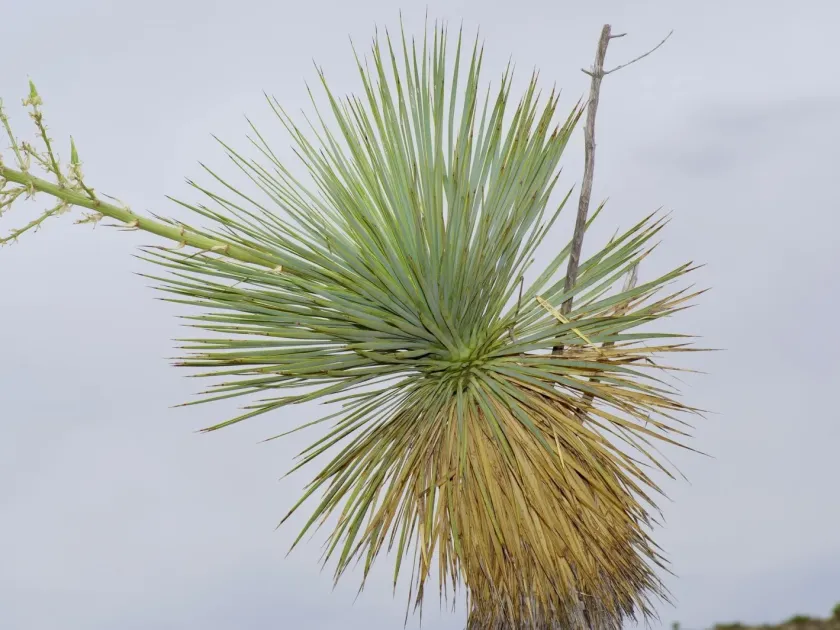
The plant features a distinct woody stem, sometimes branching, topped with a dense rosette of stiff, narrow, blue-green leaves. Its biological structure is designed for extreme water conservation, making it highly adapted to arid conditions and heat.
Agronomically, this crop requires exceptionally well-drained soil, preferably sandy or rocky substrates. It cannot tolerate heavy soils that retain moisture, as poor drainage is the primary cause of failure in cultivation for this species.
Exposure to full, direct sunlight is a fundamental requirement for the healthy development of Yucca thompsoniana. Adequate light intensity ensures the maintenance of its architectural form and promotes the production of its impressive, tall inflorescences with white flowers.
The plant demonstrates remarkable cold hardiness compared to other arborescent yuccas, often surviving sub-zero temperatures if the soil remains dry. It is highly valued in landscape management for its low water demand and high aesthetic resilience.
Main diseases and pests
The primary threats to Thompson's Yucca are fungal pathogens, specifically those causing root and crown rot. These diseases are almost exclusively triggered by over-irrigation or poor soil permeability that leads to stagnant water.
Pest management focuses on controlling sucking insects, such as scale insects and mealybugs. These pests hide within the dense leaf bases, making manual inspection and localized insecticide application essential for effective control.
Spider mites can become a problem in high-temperature, low-humidity environments, particularly in enclosed greenhouse settings. Increasing air circulation or using targeted miticides can mitigate population outbreaks.
Cercospora leaf spot and other fungal foliar diseases may appear if the canopy remains damp for extended periods. Ensuring proper spacing and airflow between plants is the best preventative strategy against these infections.
Maintaining a strictly dry cultivation environment during winter months is the most effective agronomic practice for preventing disease. Avoiding overhead watering further reduces the risk of pathogens establishing themselves on the foliage.