
Thread-leaf agave
Agave filifera
Description
Growing requirements
The Thread-leaf agave (Agave filifera) is a popular perennial succulent belonging to the Asparagaceae family. Native to the arid highland regions of central Mexico, it has adapted to survive in harsh, rocky environments with limited water access.
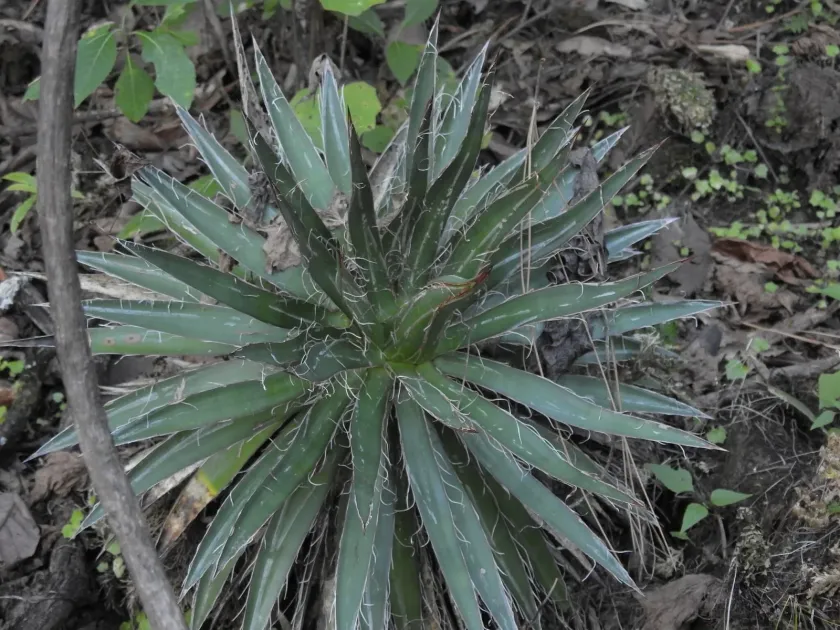
Its botanical structure consists of a symmetrical, dense rosette of stiff, dark green leaves. The plant is easily identified by the unique white, thread-like filaments that curl from the leaf margins, which is a signature characteristic of this species.
Cultivation requires full sun exposure to maintain the plant's structural integrity and characteristic shape. In indoor settings, it should be placed in the sunniest possible location, such as a south-facing window, to prevent etiolation.
The soil must be exceptionally well-draining. A mix of pumice, coarse sand, and a small amount of potting soil is recommended to prevent water retention. A lack of proper drainage is the most common cause of plant loss.
Temperature management is straightforward: the plant thrives in warm summer conditions but requires a cooler, dry rest period during winter months. Maintaining temperatures between 10–15 degrees Celsius during winter helps mimic its native climate cycle.
Main diseases and pests
Root rot is the most significant threat to Agave filifera, typically caused by overwatering or soil that remains damp for too long. Signs of distress include leaf yellowing and a softened stem base.
Pests such as mealybugs and scale insects often find refuge in the tight crevices between the leaves. These pests are notoriously difficult to detect until they have established a large population.
Spider mites can also become an issue, especially in environments with very low humidity levels. They often feed on the sap, causing mottled discolouration on the surface of the thick leaves.
Management involves using systemic insecticides or wiping affected areas with isopropyl alcohol to remove pests manually. Maintaining clean growing conditions is essential for overall plant health.
The primary cultural practice for preventing these threats is the 'soak and dry' method, where the soil is allowed to dry out completely before the next irrigation cycle, ensuring the plant never sits in saturated soil.