
Tassel hyacinth
Muscari comosum
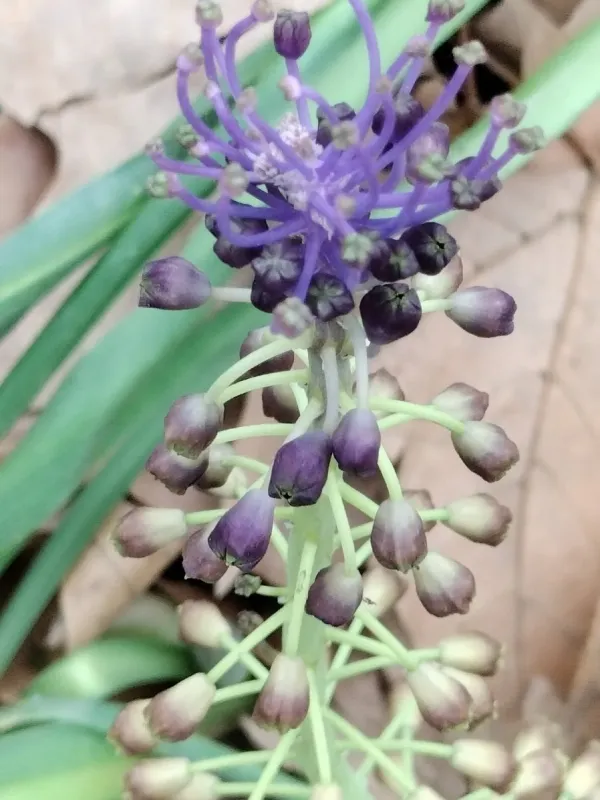
Description
Sowing dates
Planting Tassel hyacinth bulbs is best accomplished in the autumn, typically between September and October, to ensure roots establish before winter dormancy.
Propagation through seeds is also a viable method, requiring cold stratification to improve germination rates when sown in early spring.
The bulbs should be planted at a depth of 8 to 10 centimeters, maintaining a spacing of 10–15 centimeters between plants to allow for proper expansion.
Preparing the planting site with well-draining soil is crucial, as the bulbs are sensitive to waterlogging, which often leads to rotting in the cold season.
High-quality, disease-free bulbs should be selected for planting to maximize the success rate and ensure robust growth in the following season.
Growing requirements
Tassel hyacinth belongs to the Asparagaceae family and thrives in open, sunny locations where it can receive maximum light for its development.
The crop prefers well-drained, sandy-loam soils with a neutral or slightly alkaline pH to prevent the accumulation of excess moisture around the bulbs.
Being a drought-tolerant species, the plant does not require frequent irrigation, provided that the soil structure supports good water movement.
Moderate fertilization with phosphorus and potassium during the early growth stages supports the development of strong scapes and healthier bulbs.
Crop rotation is essential; the plant should not be grown in areas previously occupied by other bulbous crops to avoid the build-up of specific pathogens.
Yield
The economic value of this crop is primarily derived from its edible bulbs, which are harvested and prepared as a traditional delicacy in many regions.
Yield capacity is significantly improved by maintaining clean, weed-free plots and providing sufficient space for the growth of daughter bulbils.
Under optimal agricultural conditions, the plant displays high biological productivity, often forming clusters of bulbs that can be harvested annually.
Biological maturity is reached when the foliage dies back naturally, signaling that the bulb has finished accumulating stored energy for the next season.
The overall yield per hectare depends on the density of the planting and the fertility levels of the soil, managed through careful agricultural practices.
Main diseases and pests
The most common threats to the health of the crop include fungal infections like Fusarium rot, which are often exacerbated by excessive soil moisture.
Pests such as the onion fly and bulb mites can cause significant damage to the plant tissue, reducing the viability of the harvestable bulbs.
- Fusarium basal rot
- Onion fly infestations
- Bulb mite damage
- Leaf mosaic viruses
Integrated pest management strategies, including the use of fungicide-treated seeds and regular field monitoring, are essential for maintaining a healthy crop.
Early identification of infected plants followed by prompt removal is key to preventing the spread of diseases throughout the production area.
Harvesting
Harvesting should occur once the above-ground parts of the plant have turned yellow and dried, indicating that the bulb has reached its maximum nutrient store.
After excavation, the bulbs must be cleaned and cured in a shaded, well-ventilated area to allow the outer skin to toughen for storage.
Care must be taken during the handling process to avoid bruising or mechanical damage, which can lead to rapid post-harvest deterioration.
Storage should be conducted in a cool, dry environment with good air circulation to maintain the quality and shelf-life of the bulbs until consumption or sale.
Effective post-harvest management ensures that the edible qualities and the biological integrity of the crop are preserved for the intended market.