
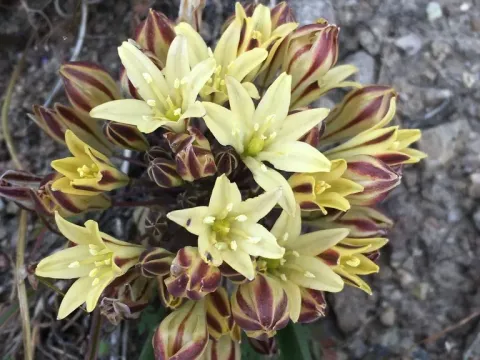
Triteleia
Triteleia Dougl. ex Lindl.
Triteleia bulbs are typically planted in the spring once the soil temperature has consistently reached 10-12 degrees Celsius and the risk of frost has passed.
What the section contains

Triteleia
In regions with mild winters, autumn planting is possible, provided that the soil is covered with a thick layer of mulch to protect the bulbs from freezing temperatures.
Bulbs should be planted at a depth of approximately three times the height of the bulb, which generally ranges between 8 and 12 centimeters depending on the size.
Proper spacing is essential for healthy development; bulbs should be planted 10–15 centimeters apart to allow sufficient airflow and nutrients for each plant.
When grown in greenhouse conditions for cut flower production, planting schedules can be adjusted to control the timing of flowering throughout the season.
Triteleia belongs to the Asparagaceae family and is native to the western regions of North America, where it thrives in open, sunny environments.
The crop requires loose, well-draining soil with a neutral to slightly acidic pH, as waterlogged soil can lead to rapid decay of the bulbs.
While the plant shows moderate drought tolerance during the active growing season, consistent and moderate moisture is necessary for high-quality flower production.
An ideal location is one with full sun exposure, protected from strong winds that could cause lodging of the tall, slender flower stalks during the bloom period.
During the dormant period, which follows the senescence of the foliage, the soil should remain relatively dry to ensure the longevity and health of the bulbs.
Fungal infections in the root system pose the greatest threat to Triteleia, usually occurring when soil drainage is insufficient or moisture levels are too high.
High air humidity can encourage the development of gray mold on the foliage, which requires immediate intervention with broad-spectrum fungicides to protect the crop.
Pests such as wireworms and seed-corn maggot larvae can cause significant damage by feeding on the bulb base, leading to plant wilting and ultimate collapse.
Thrips and aphids can also infest the plants, feeding on the sap of the leaves and stems, which can weaken the plant and reduce its aesthetic value during flowering.
Proactive measures, including bulb treatment prior to planting and crop rotation, are essential for mitigating the risk of soil-borne diseases and pest outbreaks.
Harvesting for floral use should occur when the first few florets within the cluster begin to show color or are just starting to open for maximum vase life.
Triteleia is highly valued in the cut flower industry because its stems can last for 10 to 14 days in water when handled properly after harvest.
Post-flowering, it is crucial to allow the foliage to yellow and wither naturally, as this process ensures the translocation of carbohydrates into the bulb.
In regions where winters are too cold, bulbs should be lifted after the foliage has died back, cleaned, and stored in a cool, dry place at 5–10 degrees Celsius.
For commercial maintenance, bulbs should be sorted by size and checked for damage before being stored or replanted to ensure consistent growth in the next cycle.