
Johannesteijsmannia lanceolata
Johannesteijsmannia lanceolata
Description
Growing requirements
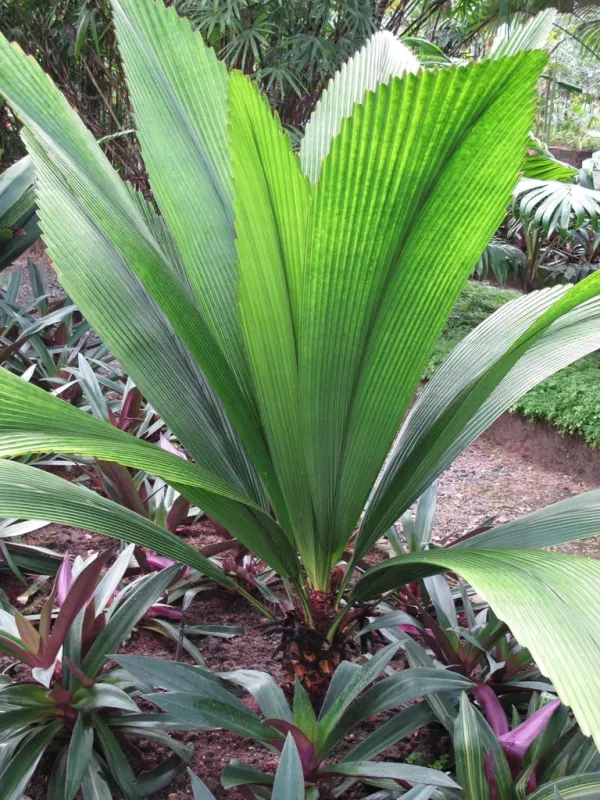
Johannesteijsmannia lanceolata is a stunning member of the Arecaceae family, highly valued by collectors for its long, simple, and lance-shaped leaves.
Originating from the dense, humid rainforests of Peninsular Malaysia, the plant thrives exclusively in environments that mimic its natural tropical habitat.
It requires a well-draining, nutrient-rich soil medium that stays consistently moist but never waterlogged to ensure healthy root development.
Temperature management is critical; the plant performs best in a stable environment between 22 and 28 degrees Celsius, away from any cold drafts.
In terms of light, it demands shade or very filtered light, as the thin leaf structure is highly susceptible to severe sun damage even from brief exposure.
Main diseases and pests
The primary threats to this palm include fungal infections such as leaf spot, which are exacerbated by high humidity levels combined with poor air circulation.
Pests like spider mites and mealybugs frequently attack the plant, especially when it is kept in dry, indoor conditions during the cooler winter months.
Root rot remains the most common cause of failure in cultivation, typically triggered by improper drainage or excessive irrigation cycles.
Nutrient deficiencies, particularly involving nitrogen and trace minerals, can result in stunted growth and chlorosis, necessitating precise fertilization schedules.
Regular sanitation, including the careful removal of damaged leaves and the use of preventative pest control, is essential for maintaining plant health.