
Traveller's palm
Ravenala madagascariensis Sonn.
Description
Growing requirements
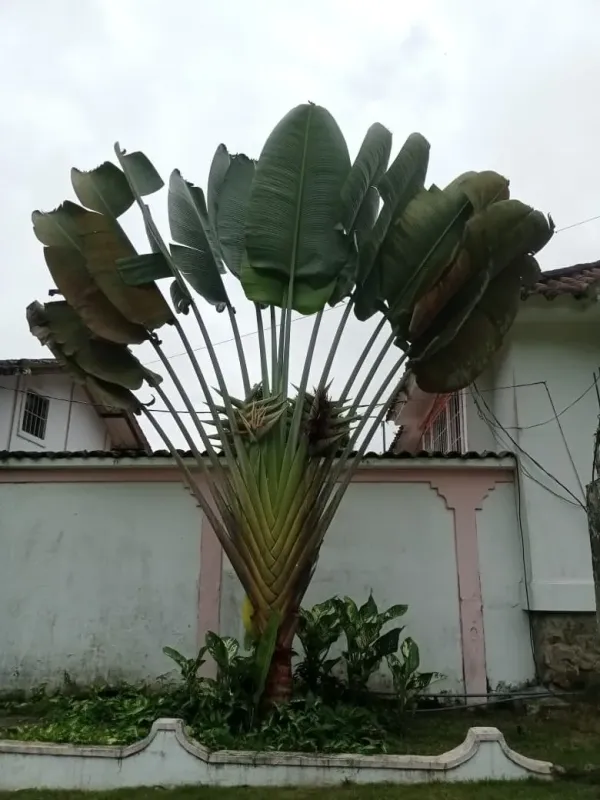
Ravenala madagascariensis, widely known as the traveller's palm, belongs to the Strelitziaceae family. Despite its common name, it is not a true palm but an herbaceous perennial, endemic to the island of Madagascar.
The plant thrives in tropical climates, requiring consistent warmth, typically between 20°C and 30°C. It is intolerant to frost and cold winds, making it exclusively an outdoor crop in tropical regions or a specialty greenhouse plant in colder zones.
Cultivation requires fertile, well-draining soil rich in organic matter. While the plant appreciates regular moisture, it is prone to root rot if water remains stagnant in the root zone, necessitating an efficient drainage system.
Adequate sunlight is essential for maintaining the distinct fan-shaped arrangement of its leaves. In shaded areas, the plant may become spindly and lose its structural integrity, which is its primary aesthetic feature.
Commercially, it is highly valued in landscape architecture for parks and gardens. Locally, the leaves are utilized for thatching roofs, while the sap is occasionally used as a source of potable water in survival contexts.
Main diseases and pests
Root rot caused by Phytophthora species is a critical threat to the traveller's palm, especially in waterlogged soils. Early symptoms include wilting and yellowing of the foliage, often followed by irreversible decay of the stem base.
Mealybugs and scale insects represent the most common pests. These insects congregate in the leaf sheaths and on the underside of leaves, causing structural damage and hindering photosynthesis through the production of honeydew.
Fungal leaf spot diseases are prevalent during periods of high humidity and poor ventilation. These diseases create unsightly lesions on the large leaves, significantly reducing the commercial value of the specimen.
Spider mites can become a problem in indoor environments with low humidity, causing fine webbing and discoloration of the leaf surfaces. Regular misting and physical cleaning are effective control measures.
Integrated pest management, including the use of systemic insecticides and proper sanitation of the growing area, is crucial. Removing dead or diseased leaf tissue helps reduce the spread of spores and improves overall plant vigor.