
Manicaria saccifera
Manicaria saccifera
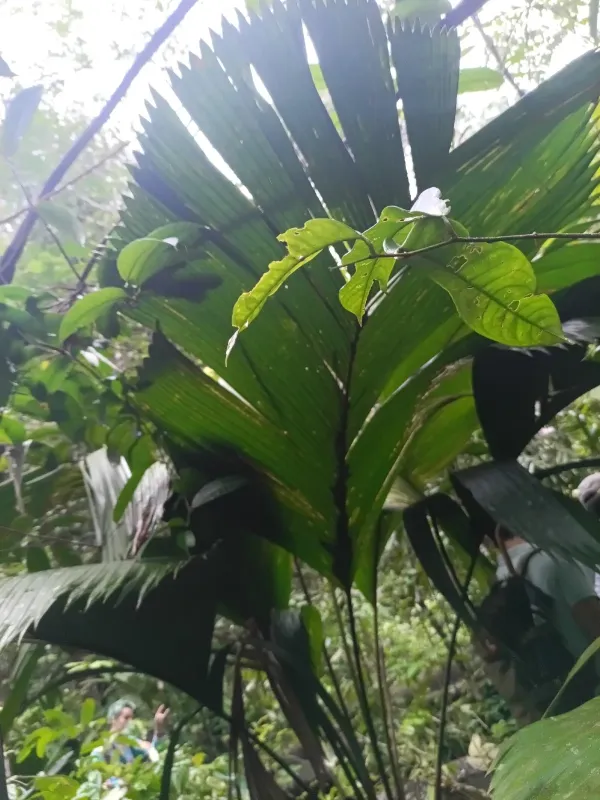
Description
Sowing dates
Propagation of Manicaria saccifera in its natural environment relies exclusively on seeds. The seeds possess high viability immediately after maturation but lose their ability to germinate very quickly if they dry out.
In professional nurseries, seeds are sown into a nutrient-rich, organic substrate where moisture levels are maintained consistently. Germination requires stable, warm temperatures, ideally between 25 and 30 degrees Celsius.
The initial growth phase of the seedlings is remarkably slow as the plant invests significant energy into building a strong, extensive root system. Transplanting young palms requires extreme care to avoid damaging the delicate root structure.
Cultivating the species demands an understanding of its ecological niche as a rainforest understory plant. Young specimens require protection from direct sunlight and consistent air humidity throughout their development.
Artificial propagation remains limited due to the necessity of mimicking complex tropical conditions. Sowing is typically practiced in botanical garden settings or small-scale forest management programs rather than industrial nurseries.
Growing requirements
Manicaria saccifera is a member of the Arecaceae family and is the only species within its genus. This palm is endemic to low-lying rainforests and swampy terrain across Central and South America.
The culture has strict requirements regarding soil and atmospheric moisture. It is well-adapted to occasional flooding, making it a key species in riverine ecosystems and waterlogged tropical zones.
Optimal growth requires loose, deep soils rich in organic matter and decaying leaf litter. Slightly acidic soil conditions are ideal for active vegetative development and nutrient uptake.
Light requirements for this species are characterized by a preference for dappled light. Direct exposure to intense sunlight during its juvenile stages can cause severe leaf scorch, as the palm typically occupies the lower tiers of the forest canopy.
Temperature range is a critical factor for survival; the palm does not tolerate temperatures below 15 degrees Celsius. Consequently, its cultivation is strictly confined to equatorial and tropical latitudes with a stable warm climate.
Yield
The economic value of Manicaria saccifera lies not in its fruit, but in the harvest of its massive, durable leaves. These leaves serve as an essential construction resource for local populations in the Amazonian basin.
Sustainable harvesting requires careful management to ensure the palm's growing point remains intact. Proper pruning techniques allow a single specimen to provide a steady yield of leaves for many years.
Yield is measured by the number of usable leaves produced per plant annually. In favorable environments, a healthy palm can produce several dozen large leaves every year, depending on soil fertility and competition.
The quality of the harvested material is directly influenced by the environmental conditions of the palm's growth. Richer soil nutrients facilitate the development of thicker, more durable fibers within the leaves.
Economic efficiency is limited by the logistics of harvesting in swampy and often remote forest areas. Despite this, the processing of Manicaria fibers remains a vital traditional craft for indigenous communities.
Main diseases and pests
Manicaria saccifera is relatively resistant to diseases in its natural habitat. The primary threat to the species is not pathogens, but the human-induced alteration of the hydrological landscape.
Fungal infections can occur when stagnant water is combined with poor substrate aeration or mechanical damage to the trunk. Such issues are mostly confined to poorly managed nursery settings.
Pests, such as palm weevils, may damage the leaf petioles in some regions. However, in healthy ecosystems, these populations are typically regulated by natural predators and biological control agents.
Deforestation remains the most significant threat to the species. The loss of pristine natural habitats leads to the fragmentation of the population, causing Manicaria to vanish from areas where it was once dominant.
Changes in groundwater levels due to infrastructure projects negatively affect the palm's overall vigor. Weakened plants become highly susceptible to secondary infections and increased pest colonization.
Harvesting
Harvesting involves the careful cutting of leaves at the base of the petiole using sharp tools. It is strictly forbidden to damage the apical bud, as the palm is unable to tiller or recover if the growing point is destroyed.
Harvested leaves are sorted by size and maturity. Older, tougher leaves are prioritized for roofing materials, while younger leaves are often utilized for weaving and lighter construction purposes.
The frequency of harvesting is determined by the rate of new leaf production. To avoid exhaustion, harvesters select only a portion of the available leaf biomass, ensuring enough leaves remain for photosynthesis.
Post-harvest, the leaves must be thoroughly dried in shaded areas. This prevents the development of mold and rot, ensuring the fibers maintain their structural integrity and waterproofing properties during long-term storage.
Dry raw material should be stored in well-ventilated areas away from humidity. Keeping moisture levels low is vital to maintaining the durability and strength of the fibers for their intended final use.