
Latania verschaffeltii
Latania verschaffeltii
Description
Growing requirements
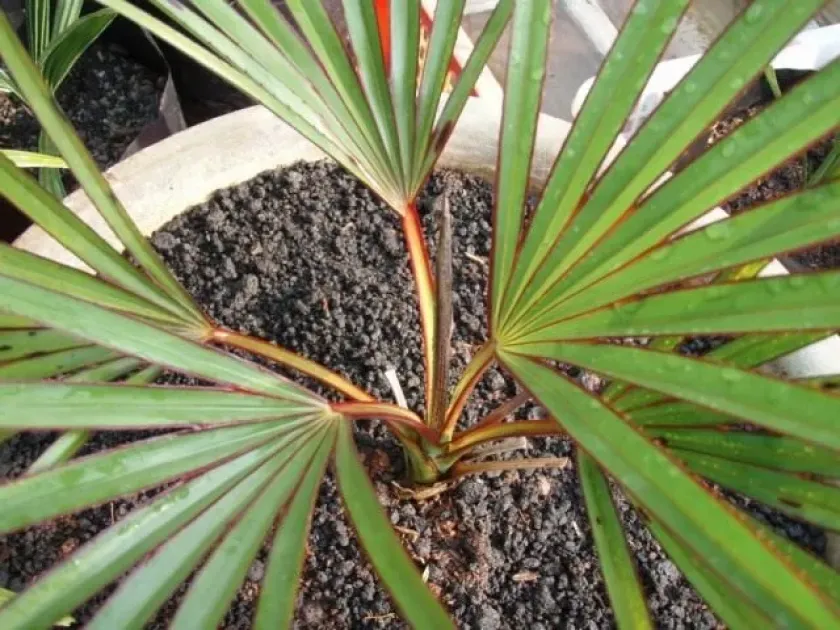
Latania verschaffeltii, commonly known as the yellow latan palm, is a distinctive fan palm belonging to the Arecaceae family. This species is endemic to the island of Rodrigues in the Indian Ocean, characterized by its slow growth and unique golden-yellow petioles.
Optimal cultivation requires a tropical environment with temperatures consistently between 22 and 28 degrees Celsius. Protection from direct, harsh sunlight is crucial during the early stages of development to prevent leaf desiccation and scorching.
The culture thrives in well-draining, nutrient-rich soil substrates. It is essential to ensure that the growing medium has excellent aeration to support root respiration and prevent the buildup of pathogens associated with waterlogging.
Humidity management is a key agrotechnical aspect for this species. Maintaining a moisture level of 60-70 percent is highly beneficial for leaf vitality, especially in controlled greenhouse environments where indoor air can become excessively dry.
Irrigation practices should be precise; while the soil must remain consistently moist, the palm is highly susceptible to root rot if the substrate becomes waterlogged. Using soft, filtered water is recommended to avoid mineral accumulation.
Main diseases and pests
The most common pests affecting Latania verschaffeltii include spider mites and scale insects. These pests often thrive in environments where ambient humidity is not effectively managed, leading to sap depletion.
Fungal pathogens represent a significant threat to the root system if the drainage protocol is ignored. Persistent dampness without proper airflow often leads to rapid decay of the primary roots.
Preventative measures include regular foliage inspection and the application of horticultural oils or systemic insecticides if pest populations reach economic injury levels.
Maintaining high hygiene standards in the nursery, including the removal of dead tissue, significantly reduces the likelihood of spreading opportunistic pathogens throughout the crop.
Proper nutritional management, emphasizing potassium and magnesium balance, is essential for maintaining the overall systemic health of the plant and its ability to resist environmental stress.