
Latania lontaroides
Latania lontaroides
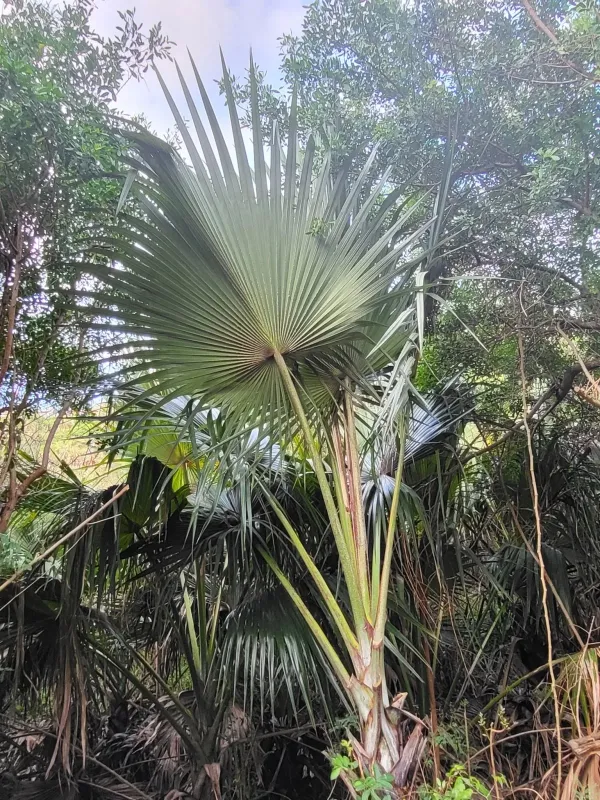
Description
Growing requirements
Latania lontaroides, commonly known as the Red Latan palm, is a member of the Arecaceae family. It is native to the island of Reunion, thriving in tropical environments.
The cultivation of this palm requires warm and stable climatic conditions. It is extremely sensitive to frost, necessitating temperatures consistently above 20 degrees Celsius.
Soil requirements involve well-drained, nutrient-rich potting mixes. A substrate that provides aeration is essential, as waterlogging will quickly kill the root system.
Exposure to light should be intense yet diffused. While mature specimens can tolerate full sun, younger plants benefit from light shade to prevent desiccation of the leaves.
Regular irrigation is vital during the growing season. The soil should remain consistently moist but never waterlogged to support the palm's high water uptake requirements.
Yield
As an ornamental crop, the productivity of Latania lontaroides is measured by the development of its foliage and structural integrity of the trunk.
The palm is characterized by a slow growth rate, which defines its value in the nursery industry. It is highly sought after for interior landscaping and botanical garden collections.
Propagation is primarily done via seeds. Success depends on the freshness of the seeds and maintaining a warm, humid environment for germination to occur.
In a controlled environment, the plant can reach considerable size over several decades, contributing significantly to its aesthetic and commercial value.
Quality control during production involves maintaining a balanced crown and ensuring the characteristic reddish hue of the leaves is preserved through proper light exposure.
Main diseases and pests
Common pests include spider mites and scale insects, which often thrive in indoor environments with low humidity and poor air circulation.
Fungal pathogens pose a risk, particularly root rot, which is a frequent consequence of overwatering or inadequate drainage systems.
Preventive measures include maintaining high humidity, regular inspections of leaf surfaces, and the use of targeted fungicides if an infestation occurs.
Nutrient deficiency can lead to foliage discoloration and slowed growth. Using balanced, slow-release fertilizers specifically formulated for palms is recommended.
Physical damage during transport or handling can leave the palm susceptible to infections, so careful maintenance of the trunk and fronds is essential.