
Larryleachia marlothii
Larryleachia marlothii
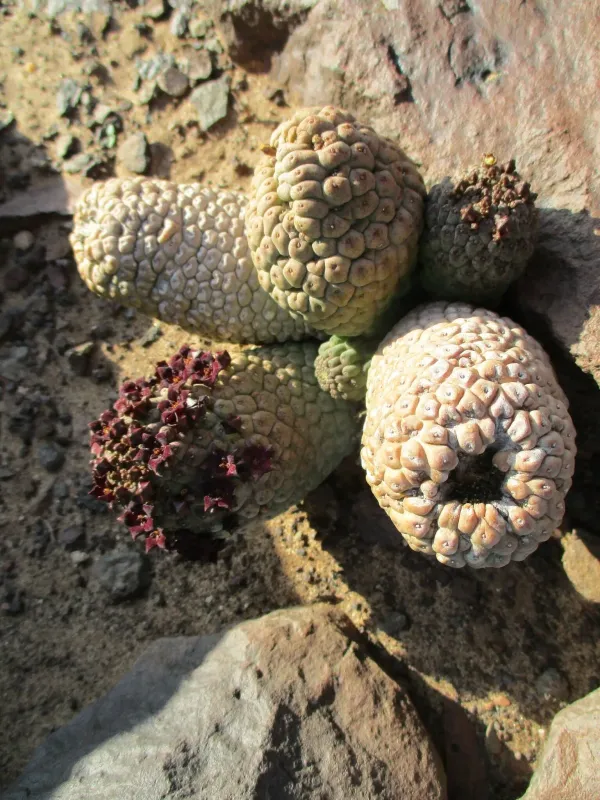
Description
Growing requirements
Larryleachia marlothii is a distinct succulent species belonging to the Apocynaceae family. It is characterized by its small, leafless, and segmented stems that resemble cactus-like forms, adapting perfectly to the harsh environments of its native South Africa.
The plant originates from the arid regions of Namibia and South Africa's Cape Province. In its natural habitat, it thrives in stony deserts, often growing in protected areas where sunlight is intense and water is extremely scarce for most of the year.
Successful cultivation requires high exposure to bright sunlight to maintain the plant's compact growth habit. Without sufficient light, the stems become elongated and weak, making the plant prone to structural collapse and reduced vitality.
The potting medium must be highly porous, consisting primarily of mineral components like coarse sand, gravel, and pumice. Organic content should be kept to a bare minimum, as the roots are highly susceptible to rot if moisture remains trapped for too long.
During the growing season, watering should be performed sparingly, ensuring the soil dries out completely between sessions. In winter, Larryleachia marlothii enters a dormant state, requiring cool temperatures and virtually no water to mimic its natural desert rest period.
Main diseases and pests
Root rot is the most common threat to this species, typically triggered by overwatering or poorly draining soil mixtures. Once the base of the stem becomes soft and discolored, it is often difficult to save the plant from progressive decay.
Mealybugs are the primary pests that affect this succulent, often hiding in the deep fissures between the plant's segments. These insects suck the sap, leading to stunted growth and creating entry points for secondary bacterial and fungal infections.
Spider mites can also become a problem, especially in environments with low airflow and high temperatures. These pests cause visible damage to the epidermis, which can manifest as dry, scarred patches that detract from the plant's aesthetic value.
Poor ventilation promotes the accumulation of moisture on the stem surface, which can encourage fungal diseases. Maintaining constant air circulation is vital, especially during humid periods, to prevent the development of necrotic spots on the succulent tissue.
Proper hygiene is essential when handling these plants, including the sterilization of cutting tools used for propagation. Regular monitoring and preventive treatments with appropriate fungicides can help maintain the health and longevity of the specimen.