
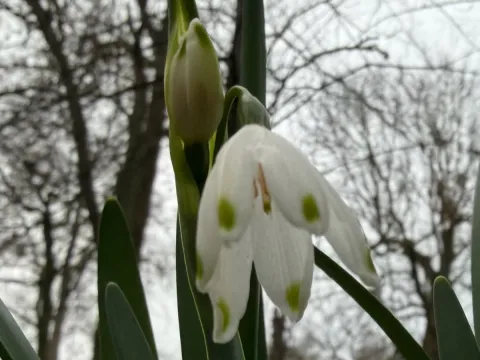
Snowflake
Leucojum L.
Propagation of Leucojum is primarily achieved through the separation of daughter bulbs. This process is ideally carried out during the plant's dormant phase, which occurs immediately after the foliage has died back in late spring or early summer.
What the section contains

Snowflake
Seeds can also be used for propagation, though this method is time-consuming and often reserved for hybridizing. Seeds must be sown fresh in a cold frame or directly into the garden, as they lose viability rapidly if allowed to dry out completely.
Bulbs should be planted at a depth of 5 to 10 centimeters, depending on the soil type. Providing adequate spacing, generally 15 to 20 centimeters, ensures that the plants have enough room to form dense, healthy clumps over time.
Once planted, the bulbs should be watered moderately to settle the soil. Proper establishment before the winter dormant season is crucial for successful flowering in the following spring.
After several years, the clumps may become overcrowded, necessitating division to maintain vigor and prevent the bulbs from becoming small and unproductive.
Snowflake is a member of the Amaryllidaceae family, originating from damp meadows and woodland environments across Europe and Western Asia. These plants thrive in fertile, moisture-retentive soils that are rich in organic matter.
The ideal location for this crop is in partial shade, where the soil remains cool and moist during the growing season. While they can tolerate full sun, supplemental watering is essential to prevent the bulbs from desiccating during dry spells.
Soil pH should ideally be neutral or slightly acidic. Good drainage is non-negotiable; while the plant enjoys moisture, standing water will cause the bulbs to rot, leading to total crop failure.
Fertilization with a balanced, slow-release fertilizer during the early stages of shoot development helps fuel a strong display of flowers. Adding compost to the site before planting is highly recommended for long-term health.
- Cool, moist soil environment.
- Good drainage to prevent rotting.
- Partial shade protection.
Grey mold (Botrytis) is the most significant fungal threat, especially in seasons with prolonged rainy weather. Ensuring good air circulation around the plants is a key management strategy.
Pests like the large narcissus fly can cause severe damage by laying eggs near the bulbs; the larvae tunnel into the bulb base, eventually consuming it. Rigorous field sanitation helps in keeping pest populations low.
Slugs and snails frequently feed on the succulent foliage of young plants. Setting bait stations or using physical barriers can protect the plants until they are robust enough to withstand minor damage.
Virus infections, characterized by leaf mottling and twisted flower stems, are often spread by aphids. Maintaining clean, virus-free planting stock is the primary method of controlling these persistent pathogens.
Root-knot nematodes and bulb mites may also infest the bulbs in warm, poorly drained soils. Avoiding mechanical injury to bulbs during handling and storage is essential to prevent secondary infections by these pests.