
Sternbergia
Sternbergia
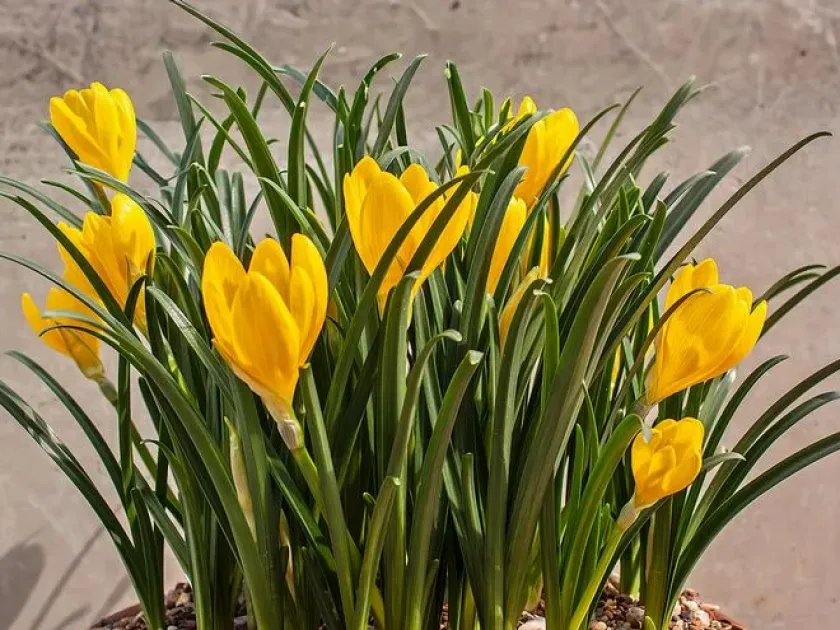
Description
Sowing dates
Sternbergia bulbs should be planted in late summer or early autumn, typically between August and September. Timely planting is crucial to ensure that the bulbs establish a strong root system before the onset of soil frost.
The bulbs should be planted at a depth of 10 to 15 centimeters. In lighter, sandy soils, it is acceptable to plant them slightly deeper to provide better insulation against fluctuating ground temperatures during the winter months.
Maintaining a spacing of 10 to 15 centimeters between individual plants is recommended. This spacing ensures proper air circulation and provides enough room for the bulbs to multiply and form offsets effectively over subsequent years.
After planting, press the soil down gently and provide a light watering if the weather is dry. Applying a layer of mulch, such as compost or dried leaves, can help conserve moisture and provide extra winter protection in colder climates.
As a member of the Amaryllidaceae family, Sternbergia is a perennial bulbous plant renowned for its stunning, bright yellow, crocus-like flowers that emerge in autumn, offering a burst of color when most garden plants are dormant.
Growing requirements
Sternbergia thrives in sunny, well-exposed locations. Adequate sunlight is essential for the plant to store sufficient energy in its bulb for flowering; therefore, shade should be avoided to prevent weak growth and reduced bloom count.
The most important soil requirement is excellent drainage. The plant is highly sensitive to waterlogged conditions, which lead to bulb rot. Soils should be gritty, loose, and well-aerated to ensure moisture does not persist around the bulbs.
A neutral to slightly alkaline soil pH is ideal for this genus. If the soil is naturally acidic, incorporating garden lime or wood ash before planting can significantly improve the growth conditions and overall health of the bulbs.
The plant has moderate frost resistance, typical of its origins in the Mediterranean and Middle Eastern regions. In areas with severe winter conditions, heavy protection such as straw or evergreen boughs is necessary to prevent deep freezing.
During the summer dormancy period, the bulbs prefer a hot, dry environment. Artificial irrigation should be completely avoided during this time, as a dry summer is key to stimulating flower production for the upcoming autumn season.
Main diseases and pests
Fungal diseases are the primary threat, often caused by poor drainage and excessive winter wetness. Conditions like Fusarium wilt or gray mold can rapidly destroy the bulbs, necessitating strict moisture control and good site selection.
Preventive measures include treating bulbs with fungicides before planting and ensuring the planting site is elevated or modified to allow excess water to drain away from the bulb area rapidly.
Rodents such as mice and voles often target Sternbergia bulbs, especially during the dormant season. Protecting new plantings with wire mesh or using biological deterrents can help safeguard the bulbs from these pests.
General insect pests that attack bulbs, such as the Narcissus fly or similar larvae, can cause damage to the bulb tissue. Regular monitoring and removing any bulbs that show signs of soft rot are essential for maintaining a healthy patch.
- Fusarium wilt
- Gray mold (Botrytis)
- Rodent damage
- Bulb-eating larvae
- Physiological rot from overwatering