
Sinai onion
Allium sinaiticum
Description
Growing requirements
Allium sinaiticum is a perennial bulbous plant belonging to the Amaryllidaceae family. It is native to the arid landscapes of the Sinai Peninsula and surrounding regions, where it thrives in extreme ecological conditions.
The plant is highly specialized for desert environments. It possesses physiological mechanisms to survive intense heat and prolonged drought, entering a dormancy phase once the soil moisture from seasonal rains evaporates.
Cultivation requires extremely well-draining, sandy or rocky substrates. Standard potting mixes used for temperate bulbs are often too water-retentive, necessitating the addition of coarse grit or perlite to mimic the native habitat.
Full solar exposure is mandatory for the development of healthy bulbs and successful flowering. In non-native climates, it is typically cultivated in greenhouses or dry garden zones that provide protection from excessive autumn and winter rainfall.
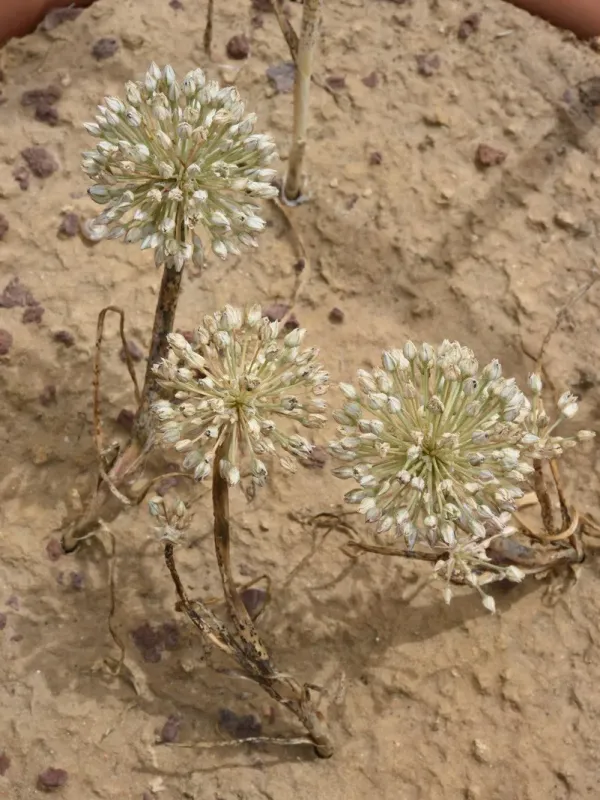
Botanically, it features a small tunicated bulb and narrow foliage. The inflorescence is a typical Allium umbel, though the species is prized primarily for its rarity and its unique adaptation to harsh, nutrient-poor soils.
Main diseases and pests
Fungal diseases, particularly those affecting the basal plate, are the primary cause of plant loss. These pathogens flourish in stagnant moisture, making precise irrigation control the most critical aspect of the plant's husbandry.
Under cultivation, plants may be susceptible to sap-sucking pests like aphids or bulb mites, especially if stressed by high humidity or poor ventilation. Maintaining good airflow around the foliage is essential for plant health.