
Sprekelia
Sprekelia
Description
Growing requirements
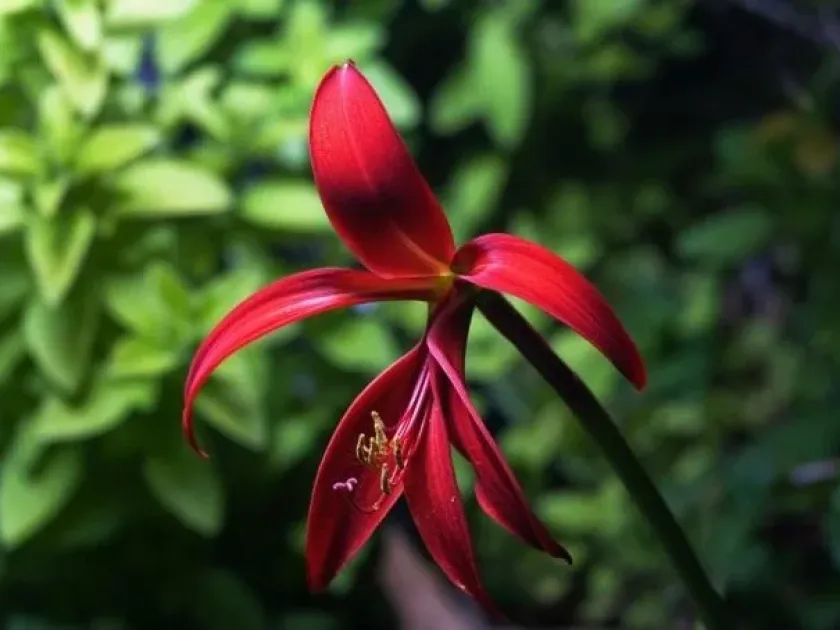
Sprekelia is a genus of bulbous perennial plants belonging to the Amaryllidaceae family. Originating from the rocky terrains of Mexico and Guatemala, this plant is widely recognized for its singular, vibrant crimson flowers that possess a unique, orchid-like symmetry.
The botanical structure consists of a single large bulb that produces long, linear, deep-green leaves. The flowering stage is particularly striking, as the flower usually emerges before or alongside the foliage, showcasing the characteristic structure of the perianth segments.
Success in cultivating Sprekelia depends on mimicking its natural environment. It requires a sunny, well-ventilated location and a porous, gritty substrate that prevents waterlogging. Poor drainage is the most frequent cause of bulb rot, making proper soil preparation a critical step in its management.
Agronomic practices for this species focus heavily on the regulation of the dormant period. Once the foliage begins to wither in late autumn, the plant must be kept dry and in a cool environment, typically between 10 to 12 degrees Celsius, to ensure the bulb successfully resets for the next cycle.
Economically, Sprekelia is cultivated as a specialty ornamental plant. It is primarily favored by greenhouse operators and boutique nurseries for its aesthetic appeal, often serving as a focal point in indoor and patio container gardening setups.
Main diseases and pests
The primary pathological threats to Sprekelia include various fungal infections such as Stagonospora curtisii, often referred to as "red blotch." This disease manifests as small red spots on the leaves and bulb scales, which can lead to structural decay if not treated with fungicide.
Pest pressures are predominantly caused by sap-sucking insects. Spider mites and mealybugs are the most common adversaries, particularly in dry, indoor conditions. Control is achieved through mechanical cleaning and the timely application of appropriate miticides or insecticides.