
Sprekelia formosissima
Sprekelia x hippeastrum
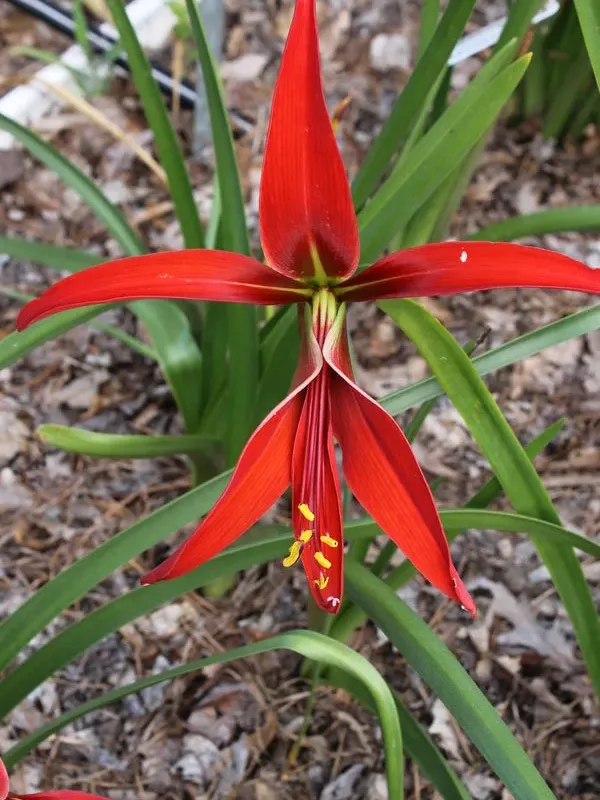
Description
Growing requirements
Sprekelia formosissima, commonly known as the Jacobean lily, is a stunning bulbous perennial belonging to the Amaryllidaceae family. Native to the mountainous regions of Mexico, this plant is highly prized for its unique, orchid-like red flowers that bloom in early summer.
For optimal growth, the culture requires plenty of bright, indirect sunlight. In cooler climates, it is typically grown as a container plant, allowing it to be moved indoors during the winter months to avoid frost damage, which can be fatal to the bulbs.
The soil must be well-draining and nutrient-rich to ensure healthy root development. A mixture of loam, leaf mold, and coarse sand or perlite is ideal for creating a growing medium that prevents excess moisture accumulation around the bulb.
Watering practices are critical for the survival of the plant. During the active growing season, the soil should be kept moderately moist, but never waterlogged. Once the foliage begins to yellow and die back, watering must be suspended entirely to initiate the dormant phase.
Temperature control is essential for successful cultivation. During the active season, temperatures between 20-25 degrees Celsius are preferred. During winter dormancy, the bulbs should be stored in a dry, cool place with temperatures around 10-12 degrees Celsius.
Main diseases and pests
The most significant threat to Sprekelia is red blotch disease (Stagonospora curtisii), a fungal infection that causes red lesions on leaves and bulb scales. It thrives in damp conditions and poor air circulation.
Bulb rot is a common issue caused by overwatering or poor soil drainage. If the soil remains saturated for long periods, the bulb will inevitably decay, leading to the rapid decline and death of the plant.
Pests such as mealybugs and scale insects often target the foliage and stems. These sap-sucking insects can weaken the plant, making it more susceptible to secondary infections and reducing the quality of future blooms.
To manage these threats, it is advised to use sterilized potting mix and ensure that the bulb neck remains above the soil surface during planting. This reduces the risk of fungal spores taking hold at the base of the bulb.
Integrated pest management, including the use of horticultural oils for scale or systemic insecticides for mealybugs, is effective. Regular monitoring for any signs of infestation or discoloration is the best way to maintain plant health.