
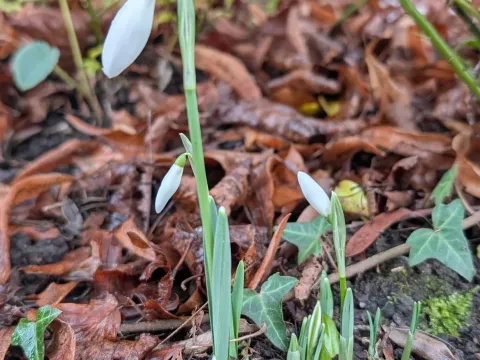
Snowdrop
Galanthus
Snowdrops are ephemeroids and are primarily propagated vegetatively using daughter bulbs. The ideal time for planting is during the dormancy phase, which occurs after the aerial parts die back, typically between July and September.
What the section contains


Snowdrop
When propagating via seeds, sowing should be done immediately after harvesting, as seeds lose viability quickly if allowed to dry out. Seeds are sown in open ground into prepared furrows at a depth of no more than 1–2 centimeters, ensuring the substrate remains moderately moist.
The planting depth for bulbs depends on their size and soil composition. A standard practice is to bury the bulb at a depth equal to twice its height, which averages about 5–7 centimeters from the base to the soil surface.
It is crucial to avoid planting too deep, which delays growth and blooming, or too shallow, which leads to overheating in summer and freezing during winter. When planting in mass, maintain a distance of 7–10 centimeters between bulbs to ensure adequate nutrient uptake.
After planting, it is recommended to mulch the area with peat or leaf compost. This helps preserve soil structure, prevents crust formation, and creates a favorable microclimate for successful root establishment before the onset of winter frosts.
Galanthus is a perennial bulbous plant belonging to the Amaryllidaceae family, comprising about 20 species. It thrives in open areas or light shade under tree canopies, where there is sufficient sunlight in early spring and cool conditions during the summer.
The crop requires moist, humus-rich, loose, and well-drained soil. Water stagnation is detrimental to the bulbs and quickly leads to rot, so on heavy clay soils, a drainage layer of sand or fine gravel is essential for moisture management.
The plant possesses high frost resistance and can withstand significant temperature fluctuations, allowing it to emerge through frozen soil and snow cover in late winter. A period of winter dormancy at low positive or negative temperatures is necessary for full bloom.
During the active growth and flowering phases, the soil must remain moderately moist. However, in the dormancy phase, which occurs during the summer months, the plant prefers relative dryness, characteristic of its natural habitat in deciduous forests and woodland edges.
Cultivation techniques include timely application of mineral fertilizers. Top dressing is conducted twice per season: the first application occurs at the start of growth using phosphorus-potassium fertilizers to stimulate flowering, and the second after flowering to support bulb replacement.
The primary threats to snowdrops are fungal diseases, which develop under conditions of excessive soil and air humidity. Common diseases include grey mold and rust, manifested by spots on the leaves and rot of the bulbs.
To prevent the spread of infections, it is necessary to follow crop rotation and avoid overcrowded planting, which restricts air circulation. Affected specimens should be immediately removed and destroyed to prevent spreading to neighboring plants.
Among pests, the most significant damage is caused by rodents (field mice) that consume the succulent bulbs during the winter period. Additionally, the crop can be affected by the stem and bulb nematode, which causes leaf deformation and halts the overall plant growth.
Pest management involves using specialized insecticides and fungicides during the preparation of planting material. Soaking bulbs in disinfecting solutions before planting significantly reduces the risk of fungal and parasitic attacks.
- Maintain proper irrigation to avoid waterlogging.
- Use only high-quality planting material free from signs of rot.
- Install protective wire mesh or baskets when planting to deter rodents.
Bulbs are harvested for propagation or transplantation only after the aerial parts have turned yellow and completely dried. This indicates that nutrients have fully migrated from the leaves into the bulb, ensuring sufficient energy storage for the next growth cycle.
Once dug up, the bulbs must be cleaned of old roots and soil, then dried in a shaded, well-ventilated area. Avoid direct sunlight, as this causes the base to dry out and reduces the viability of the planting material.
For storage, bulbs should be placed in containers with dry peat or sawdust. It is important to maintain a cool, dry room with good ventilation to prevent premature sprouting or mold development during the storage period until autumn planting.