
Galenia africana
Galenia africana
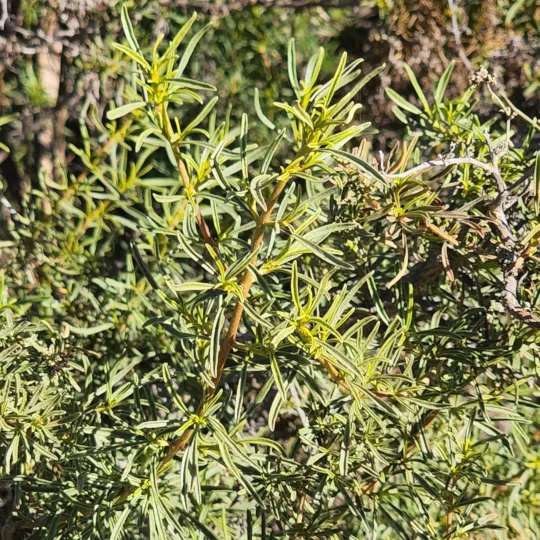
Description
Growing requirements
Galenia africana is a perennial subshrub belonging to the Aizoaceae family, native to the arid regions of Southern Africa, particularly the Karoo. It is a highly specialized plant that has adapted to survive in harsh, drought-prone environments.
The botanical structure of the plant is characterized by its succulent, linear leaves covered with fine hairs, which help minimize water loss. The plant features a sprawling growth habit with numerous branches, allowing it to cover ground effectively in arid landscapes.
In terms of environmental requirements, Galenia africana thrives in well-drained, sandy or gravelly soils. It is exceptionally tolerant of high solar radiation and prolonged moisture deficits, making it a pioneer species on degraded or disturbed lands.
From an agricultural standpoint, it is often classified as a bush encroacher. Its presence on rangelands is frequently considered an indicator of overgrazing, as it replaces more nutritious forage species when native pastures are degraded by excessive livestock pressure.
Economic utility is currently limited because the plant contains secondary metabolites that make it unpalatable or potentially toxic to livestock. Research continues into its ecological role and potential management strategies to control its spread on valuable grazing lands.
Main diseases and pests
The most significant threat to Galenia africana is excessive soil moisture, which predisposes the root system to fungal pathogens. Root rot is the primary cause of decline when environmental conditions shift towards higher precipitation levels than the plant is adapted to.
Pests are relatively uncommon due to the chemical defense mechanisms present in the plant's tissues. However, certain opportunistic insects may attack the foliage during specific seasons, though such occurrences rarely result in total plant loss.
Competition from fast-growing, nitrophilous grasses can suppress Galenia africana populations. As nutrients become available in the soil, more competitive species often outgrow this slow-growing subshrub, limiting its dominance in the ecosystem.
Agricultural mechanical interventions are highly effective in controlling this plant. Tilling and heavy grazing management are standard practices used to remove or reduce the density of this shrub in areas intended for high-quality pasture production.
Environmental shifts caused by climate change may alter the distribution of this species. While it is hardy, it relies on specific seasonal rainfall patterns to maintain its population density, and significant deviations in these cycles pose a long-term risk to its survival.