
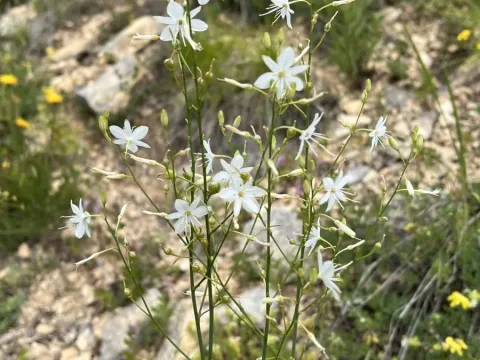
St. Bernard's lily
Anthericum ramosum
St. Bernard's lily (Anthericum ramosum) is a perennial herbaceous plant belonging to the Asparagaceae family, known for its elegant branched inflorescences.
What the section contains
St. Bernard's lily
Propagation is typically done through seeds. Sowing in the autumn allows for natural cold stratification, which is essential for successful germination in the spring.
When starting indoors, seeds require a cool period and well-draining soil. Maintain temperatures around 18-20°C for optimal development of seedlings.
Transplanting should be handled with care as the plant develops a deep root system. It is best to move seedlings to their final location while still young.
Ensure adequate spacing of at least 30 cm between plants to allow for sufficient air circulation and root development as the plant matures.
This species thrives in sunny, open locations. While it can tolerate partial shade, full sun exposure is necessary for vigorous growth and abundant flowering.
The ideal soil is sandy, calcareous, and well-draining. The plant is highly sensitive to waterlogged conditions, which can lead to rapid root rot.
St. Bernard's lily is drought-tolerant once established. Supplemental watering is only required during prolonged dry spells during the spring growth phase.
The plant is hardy in temperate zones and generally does not require winter protection. In colder regions, a light mulch can help regulate soil temperature.
Minimal fertilization is needed. A balanced fertilizer applied in early spring is usually sufficient to support the plant's seasonal development.
The primary use of Anthericum ramosum is ornamental gardening. It is highly valued for its delicate, white, star-shaped flowers that appear in early summer.
In a well-managed garden, a mature plant can produce multiple flower spikes, adding significant aesthetic value to rock gardens and wildflower meadows.
The inflorescences are long-lasting and can be used in fresh or dried floral arrangements, making them a popular choice for garden hobbyists.
Seed production is consistent, and harvesting the seeds can provide a sustainable way to increase the population of these perennials in a landscape.
There are no significant industrial agricultural uses for this species; its value remains rooted in its botanical beauty and role in biodiversity.
The most significant threat to the plant is high soil moisture. Poorly drained areas often lead to root and crown rot, which are difficult to reverse.
Slugs and snails can cause cosmetic and structural damage to the foliage, particularly in humid climates or during periods of high precipitation.
Aphids may appear on the flower buds during the peak of the season. If infestation is severe, mild insecticidal soaps are effective for control.
Maintaining good airflow and avoiding overcrowding in the garden helps prevent the development of powdery mildew and other foliar fungi.
Regular maintenance, including removing dead foliage at the end of the season, helps keep the plant healthy and reduces the risk of pest colonization.