
Spotted Agave
Agave maculata
Description
Sowing dates
Propagation of the spotted agave (Agave maculata) is most effectively achieved through offsets, or "pups," that develop around the base of the mother plant during the growing season.
When propagating from seeds, it is necessary to use a well-draining, gritty medium and maintain a temperature between 22°C and 25°C to ensure successful germination.
Seeds should be sown shallowly and covered with a fine layer of sand, keeping the substrate consistently moist but not waterlogged until the sprouts appear.
Young plants should be kept in bright, indirect light until they are strong enough to be transplanted into individual pots with a standard cactus soil mix.
Care should be taken when handling the parent plant to avoid damaging the roots of the small offsets, which are sensitive during the initial establishment phase.
Growing requirements
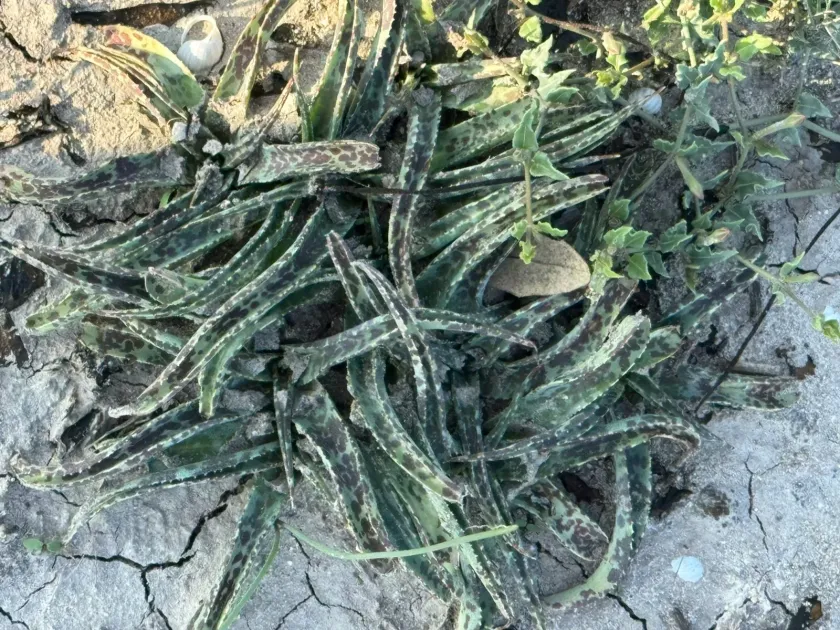
The spotted agave belongs to the Asparagaceae family and is a distinctive succulent known for the mottled patterns on its thick, lanceolate leaves.
This species requires full sun exposure to maintain its compact growth habit and vivid leaf markings; insufficient light will cause the plant to etiolate.
Soil requirements are strict: the plant thrives in mineral-rich, porous, and fast-draining substrates that prevent moisture accumulation around the root system.
During the active growth phase, watering should be thorough but infrequent, allowing the soil to dry out completely before providing additional moisture.
In winter, the plant enters a period of dormancy, necessitating a significant reduction in watering frequency and keeping the plant in a cooler environment.
Main diseases and pests
The primary threat to the health of the spotted agave is root rot, typically caused by overwatering or poorly draining soil conditions during cooler months.
Pests such as mealybugs and scale insects are common problems, as they tend to hide between the tightly packed leaves of the rosette structure.
Regular inspection of the leaf bases is essential to detect pest activity early and prevent the infestation from spreading to the rest of the plant.
If an infestation occurs, applying organic horticultural oils or systemic insecticides is recommended to safely eliminate the insects without harming the plant.
Maintaining good airflow around the rosette is a key prophylactic measure to discourage the development of fungal pathogens and prevent stagnant air conditions.