
Star of Bethlehem
Ornithogalum hybrids
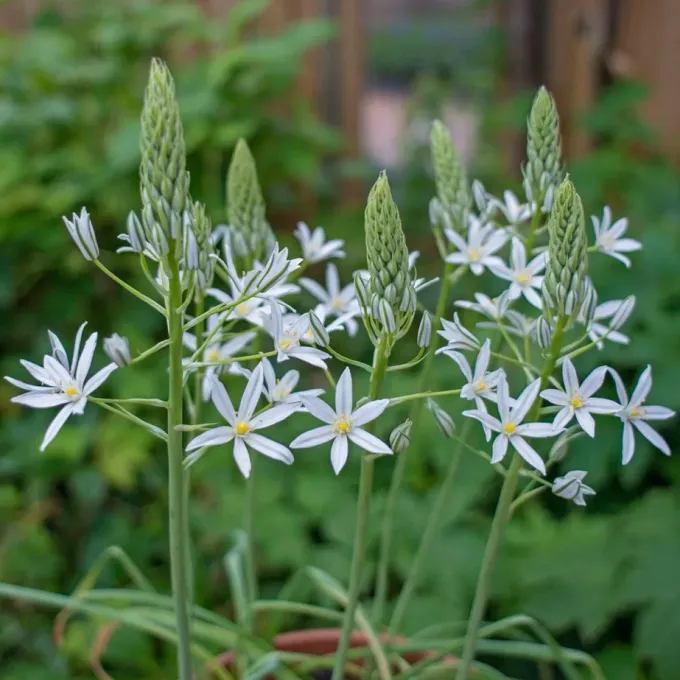
Description
Sowing dates
Planting Ornithogalum bulbs should typically occur in the autumn, allowing the roots to establish before the onset of the dormant winter season.
In regions with harsh winters, planting may be delayed until early spring after the risk of severe ground frost has passed and soil temperature has increased.
The bulbs should be planted at a depth of 6 to 10 centimeters, depending on their size, ensuring they are placed with the basal plate facing downwards.
When propagating via seeds, sow them immediately upon maturity in a well-drained substrate, as their viability decreases significantly over time.
Optimal spacing is essential to ensure proper airflow around the foliage, which reduces the humidity levels that often lead to fungal pathogen proliferation.
Growing requirements
The Star of Bethlehem belongs to the Asparagaceae family and thrives best in full sun, although it can tolerate partial shade in hot climate zones.
The crop requires well-drained, fertile soil with a neutral pH, as poor drainage is the primary cause of root rot and bulb deterioration in this species.
Watering management is crucial; the soil should remain moist during the growing season but must never be waterlogged, which suffocates the root system.
Regular fertilization with balanced NPK formulas during the pre-blooming stage promotes vigorous growth and enhances the quality of the developing bulbs.
Cultivation practices include keeping the planting area free of weeds, which helps prevent competition for essential nutrients and limits pest hiding spots.
Main diseases and pests
Fungal diseases, including Fusarium wilt and various bulb rots, are the most significant threats to Ornithogalum plantations, especially in humid conditions.
Effective control involves treating bulbs with systemic fungicides before planting and maintaining strict hygiene practices within the nursery environment.
Pests such as bulb mites can severely damage the plant's underground structures, leading to stunted growth or total plant failure if left unmanaged.
Integrated Pest Management (IPM) strategies, including biological controls and targeted chemical applications, are recommended to minimize damage.
Early identification of diseased plants and their prompt removal are necessary to prevent the spread of infections to healthy stock in the field.
Harvesting
Harvesting should only begin once the foliage has naturally turned yellow and withered, indicating that the bulb has reached maturity and stored sufficient energy.
Careful digging techniques are required to avoid skinning or bruising the bulbs, as any break in the surface makes the plant vulnerable to storage diseases.
Post-harvest, bulbs should be cleaned, inspected for defects, and allowed to cure in a dry, ventilated area away from direct sunlight for several days.
The cured bulbs are then stored in mesh trays with dry peat or sand to maintain humidity balance and prevent desiccation during the dormant period.
Proper storage conditions, ideally between 15 and 18 degrees Celsius, ensure high bulb vitality and uniform emergence in the following planting cycle.