
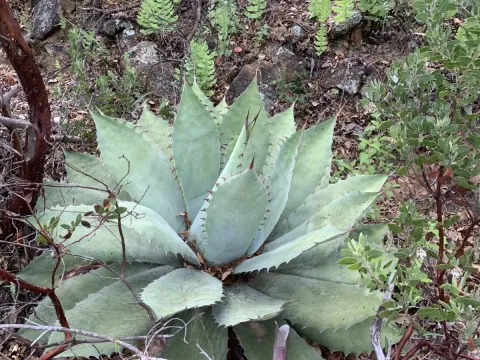
Seemann's Agave
Agave seemanniana
Seemann's Agave (Agave seemanniana) is a succulent species belonging to the Asparagaceae family. It is native to the arid and tropical highland regions of Central America, primarily found in Mexico, Guatemala, and Honduras.
What the section contains
Seemann's Agave
The plant thrives in well-drained, gritty, or sandy soils that mimic its natural rocky habitat. It is highly adapted to high-light environments and requires full sun exposure to maintain its structural integrity and leaf color.
Climate-wise, this species prefers warm temperatures and is extremely sensitive to frost and waterlogging. Successful cultivation requires a controlled environment where the root system can remain dry during the dormant period.
Agricultural techniques for this culture focus on minimal irrigation strategies. Farmers must ensure that the substrate is allowed to dry out completely between watering sessions to prevent cellular breakdown of the leaves.
Economically, while primarily valued as an ornamental succulent in horticulture, the plant is part of the local biodiversity in its origin countries, contributing to ecosystem stability in arid zones.
The most common threat to Seemann's Agave is root rot, usually caused by improper soil moisture management or heavy clay soils that retain excessive water.
Pests such as mealybugs and spider mites are frequent invaders. They feed on the succulent tissues, leaving the plant vulnerable to secondary bacterial infections.
Integrated pest management involves physical removal of parasites and the application of systemic pesticides if an infestation becomes widespread within the plantation.
Regular inspection of the leaf axils is crucial, as pests tend to hide in the tight spaces between the succulent leaves where they are difficult to reach with standard treatments.
Proper airflow and avoiding overhead irrigation are essential prophylactic measures to prevent fungal spores from settling on the foliage and causing necrotic spots.