
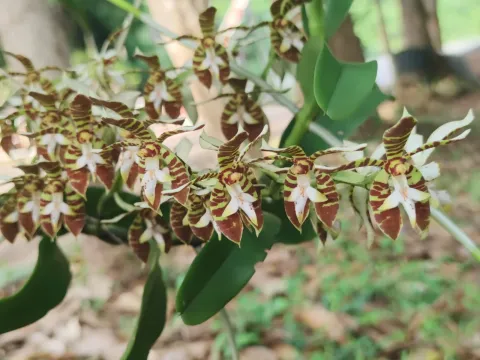
Trichoglottis
Trichoglottis
Trichoglottis is a genus of epiphytic plants belonging to the Orchidaceae family. Cultivating these plants requires precise environmental control to replicate their native tropical forest habitats found in Asia and Australia.
What the section contains


Trichoglottis
These plants thrive in high humidity conditions, ideally ranging from 70% to 80%. Maintaining this level is essential to ensure healthy tissue development and to prevent the premature drying of foliage.
The optimal temperature range for the active growth of Trichoglottis is between 22°C and 28°C. Consistent temperatures are preferred, as sharp fluctuations can lead to floral abortion and plant dormancy.
Regarding light, these plants require bright, indirect illumination. Direct sun exposure is detrimental, often causing tissue necrosis; therefore, professional shading nets are recommended for greenhouse settings.
The growth medium must be highly porous and well-draining, typically consisting of conifer bark, charcoal, and sphagnum moss. This composition allows for proper oxygenation of the root system.
The most common pests affecting Trichoglottis are spider mites, which proliferate rapidly in low-humidity environments, leading to significant foliage chlorosis.
Mealybugs are also a frequent problem, often hiding in the crevices of the stem and leaf bases, requiring systemic insecticides for effective management.
Fungal pathogens represent a primary threat to the vitality of the plant, often resulting from poor airflow or water accumulation within the leaf axils.
Root rot is the most dangerous condition for Trichoglottis, usually caused by poor substrate drainage or overly frequent irrigation schedules.
Effective management involves consistent monitoring for early symptoms, quarantine of infected plants, and the strategic application of fungicides and miticides.