
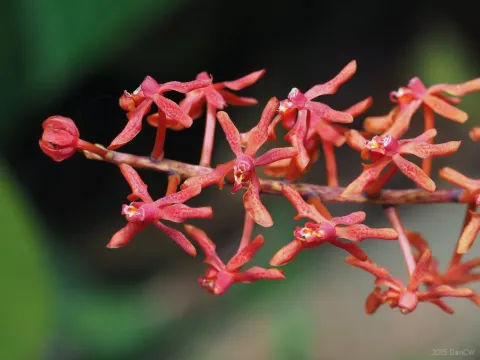
Renanthera
Renanthera
Renanthera is a genus of perennial epiphytic and lithophytic plants belonging to the Orchidaceae family. Native to the tropical regions of Southeast Asia, these orchids thrive in environments characterized by high humidity, stable tropical temperatures, and excellent air circulation, often found in high-altitude forest canopies.
What the section contains
 Renanthera coccinea
Renanthera coccinea
Renanthera coccinea
 Renanthera elongata
Renanthera elongata
Renanthera elongata
 Renanthera histrionica
Renanthera histrionica
Renanthera histrionica
 Renanthera hybrids
Renanthera hybrids
Renanthera hybrids
 Renanthera imschootiana
Renanthera imschootiana
Renanthera imschootiana
 Renanthera matutina
Renanthera matutina
Renanthera matutina
 Renanthera monachica
Renanthera monachica
Renanthera monachica
 Renanthera storiei
Renanthera storiei
Renanthera storiei
Renanthera
Botanically, Renanthera plants are characterized by a monopodial growth habit, featuring long, stout stems and long-lasting inflorescences with numerous vibrant flowers. The economic importance of this genus lies in its decorative value, with many cultivars used extensively in the global cut-flower industry.
Climate requirements for Renanthera include a consistently warm environment, with daytime temperatures ideally between 25°C and 32°C. Nighttime temperatures should not drop significantly below 18°C to ensure steady metabolic processes and avoid stress that could inhibit flowering cycles.
Light intensity is perhaps the most critical factor in their cultivation. Unlike many other orchid genera, Renanthera requires high light levels, often comparable to full sun, to initiate blooming. In greenhouse production, supplemental lighting is frequently employed to maintain optimal growth throughout the year.
The substrate must provide superior drainage and aeration to mimic the natural epiphytic habitat. A typical mixture consists of large-grade pine bark, charcoal, and perlite. This structure ensures that moisture is retained in the bark while allowing sufficient oxygen to reach the roots, which is vital for plant health.
The primary pests affecting Renanthera in controlled environments are spider mites and scale insects, which proliferate in low-humidity conditions. Integrated pest management strategies, including the use of targeted systemic insecticides and increasing humidity, are essential for maintaining a healthy crop.
Fungal pathogens such as Fusarium and black rot are major threats, often exacerbated by poor air circulation or over-watering. Strict sanitary protocols, including disinfecting pruning tools and maintaining an optimal VPD (Vapor Pressure Deficit) within the greenhouse, are the best methods for prevention.