
Renanthera histrionica
Renanthera histrionica
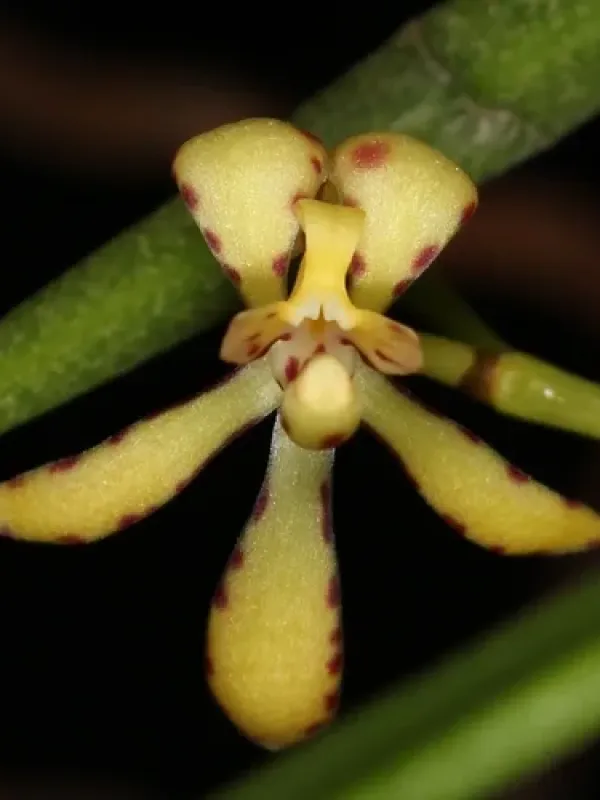
Description
Growing requirements
Renanthera histrionica is a distinct species of epiphytic orchid belonging to the Orchidaceae family. Known for its specific monopodial growth habit, this plant is highly regarded among enthusiasts for its unique structure and specialized ecological adaptation within tropical forest ecosystems.
The origin of this species is traced back to the dense tropical rainforests of Southeast Asia, particularly regions in Malaysia and Borneo. It thrives in high-humidity environments where it attaches itself to host trees, relying on aerial roots to extract moisture and essential minerals from the canopy atmosphere.
Botanically, the plant features elongated stems clothed in stiff, strap-shaped leaves. Its root system is exceptionally efficient, designed to withstand frequent rainfall while maintaining attachment to vertical surfaces. The plant is structurally robust, reflecting its adaptation to the competitive environment of the tropical understory.
Cultivation requirements for Renanthera histrionica demand a climate that mimics tropical conditions throughout the year. Temperatures must remain consistently warm, ideally between 22 and 30 degrees Celsius. High atmospheric humidity, sustained by regular misting or automated systems, is vital for the plant's health.
Soil management for this epiphyte focuses on perfect drainage rather than nutrient retention. Growers typically utilize coarse orchid bark, charcoal, and perlite mixtures. It is essential to ensure that the root system is exposed to adequate air circulation, which prevents the development of stagnant conditions near the base.
Main diseases and pests
The primary threats to this orchid include various fungal pathogens that flourish in environments with poor air exchange. Root rot is a common issue if the potting medium remains saturated for too long, often caused by inadequate drainage or overwatering during cooler periods.
Pest management is equally crucial, as the succulent leaves of the plant are attractive to spider mites, aphids, and scale insects. These pests can rapidly compromise the health of the plant by draining its vascular fluids, making preventative hygiene and regular monitoring key to successful maintenance.