
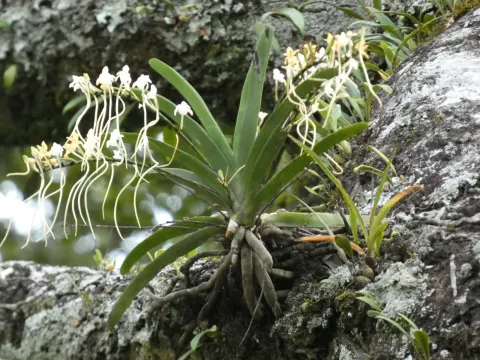
Rangaeris
Rangaeris
Rangaeris is a genus of epiphytic plants belonging to the Orchidaceae family. Native to the tropical regions of Africa, these plants naturally grow attached to tree branches, utilizing their aerial roots to absorb moisture and nutrients directly from the air and rain.
What the section contains

Rangaeris
Successful cultivation of Rangaeris requires mimicking their natural habitat, which entails maintaining a high relative humidity, ideally between 70% and 80%. Proper ventilation is equally essential to prevent stagnant air, which can promote fungal growth.
The substrate must be extremely well-draining, as the roots are highly susceptible to rot if kept in soggy conditions. Growers typically use coarse pine bark, cork slabs, or specialized orchid mixes that allow for rapid drying between watering cycles.
Temperature management is critical; these orchids thrive in moderate temperatures during the day, typically ranging from 22°C to 26°C, with a slight drop at night. Maintaining this diurnal temperature difference is often necessary to trigger the flowering response.
Bright, indirect light is necessary for healthy photosynthesis. Exposure to direct afternoon sun should be strictly avoided to prevent thermal damage to the leaves, which are adapted to the filtered light of the forest canopy.
Fungal rots are the most significant threat to Rangaeris. These often manifest when the roots remain wet for too long or when water accumulates in the leaf axils, leading to localized decay that can quickly spread to the entire crown of the plant.
Spider mites are common pests that thrive in dry environments. They extract sap from the foliage, causing a stippled appearance and significant loss of vigor. Increasing humidity levels is a primary cultural control method against these pests.
Scale insects can also infest the plant, hiding under the foliage or along the stem. These pests are protected by a waxy covering, making them resistant to contact sprays; systematic manual removal and the use of targeted insecticides are required.
Bacterial soft rot can occur following mechanical injuries or severe heat stress. It is characterized by a foul odor and mushy, discolored tissue, requiring immediate isolation of the plant and surgical removal of affected parts with sanitized tools.
Mealybugs are another persistent pest in orchid collections. They tend to cluster in secluded spots, making early detection difficult. Regular monitoring of the underside of leaves and the junction of the roots is highly recommended for early intervention.