
Rangaeris rhipsalisocia
Rangaeris rhipsalisocia
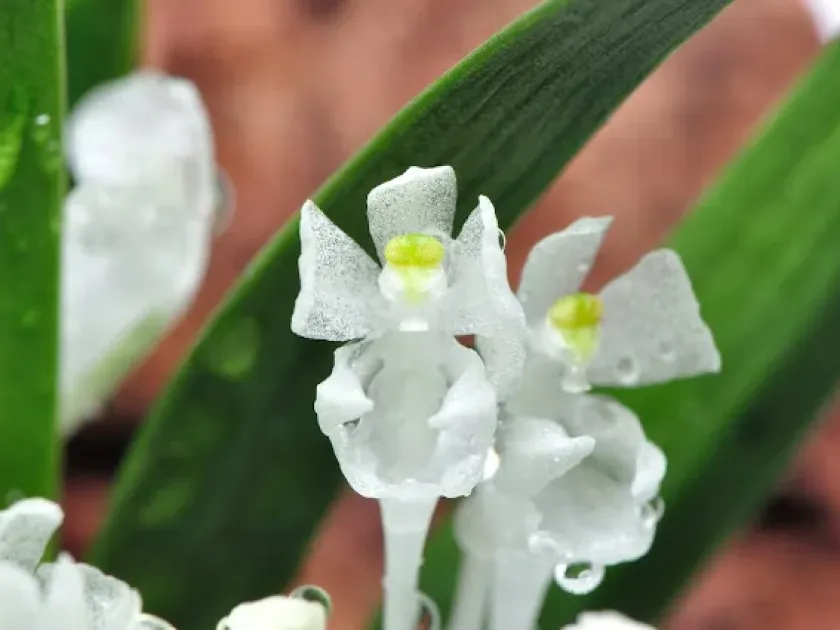
Description
Growing requirements
Rangaeris rhipsalisocia is a fascinating species of epiphytic orchid belonging to the Orchidaceae family. It originates from the tropical regions of Africa, where it thrives in humid canopy environments.
The plant is known for its distinct, pendulous growth habit, with thin, succulent-like stems that mimic some species of the Rhipsalis cactus genus. Its botanical structure is perfectly adapted to minimize water loss while maximizing light absorption.
Cultivation requires a specific microclimate with high ambient humidity and excellent air circulation. Growers should maintain a warm environment with temperatures ideally ranging between 20°C and 25°C throughout the year.
Light intensity should be moderate and diffused. Exposure to direct midday sunlight can lead to leaf scorching, therefore a bright eastern or northern orientation is generally preferred for this indoor crop.
The substrate must be highly porous and fast-draining, such as high-quality orchid bark or a mixture of perlite and charcoal. Watering should follow a cycle that allows the roots to dry out partially between sessions.
Main diseases and pests
Pathogenic fungi are a significant threat to Rangaeris rhipsalisocia, usually triggered by improper ventilation and stagnant moisture in the root zone. Root rot is a common outcome of overwatering.
Bacterial infections can manifest as soft, translucent spots on the stems. Once spotted, the infected area should be removed immediately using sterilized tools to prevent the further spread of the disease.
Common pests include scale insects and mealybugs, which often settle in the tight spaces between leaf axils. Their feeding leads to stunted growth and the transmission of viral pathogens.
Spider mites are another major concern, especially in environments where humidity drops too low. These pests cause silvery stippling on the leaves and can cause rapid decline if left untreated.
Integrated pest management is crucial for this species. Regularly inspecting the underside of the leaves and maintaining high sanitary standards within the greenhouse or indoor growing space is essential.