
Pleione
Pleione
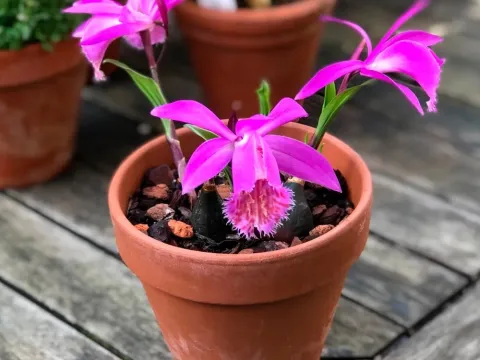
Pleione is a genus of deciduous terrestrial orchids belonging to the Orchidaceae family, native to the mountainous regions of Asia, spanning from India to China. In horticulture, these plants are prized for their spectacular blooming period, which typically occurs before the emergence of new foliage.
What the section contains


Pleione
Successful cultivation requires a distinct seasonal cycle with a pronounced dormant period, during which temperatures must be kept cool, ideally between 0...+5°C. During the growing season, these plants require bright but indirect sunlight, avoiding harsh, direct exposure.
The substrate for Pleione must be loose, moisture-retentive, yet capable of providing excellent drainage. A mix consisting of fine-grade pine bark, sphagnum moss, perlite, and a small amount of compost for nutrients is considered optimal for healthy development.
Agricultural management requires high humidity levels combined with strict control over substrate moisture. During the active growth phase, watering should be regular and thorough, but water stagnation in the pot must be avoided to prevent pseudobulb decay.
In terms of practical use, Pleione are cultivated primarily as ornamental crops in greenhouses and private collections. They are perfectly suited for cold greenhouse environments or placement on cool, shaded verandas where the temperature fluctuates according to the seasons.
The primary threat to this culture is various types of rot caused by improper watering practices and poor root system aeration. Excessive moisture frequently triggers bacterial and fungal infections that damage the pseudobulbs.
Common pests include spider mites, which thrive in low-humidity environments, as well as scale insects and mealybugs that congregate in leaf axils and around the pseudobulb structure.
To prevent the spread of pests, regular inspection of the plants is essential, alongside maintaining high standards of hygiene in the growing area. Preventive treatments with systemic insecticides can significantly reduce potential losses.
Monitoring the quality of the growing medium is critical, as the breakdown of organic components can lead to soil acidification. This stresses the orchid, leaving it highly susceptible to opportunistic pathogens.
Effective disease control relies on strictly observing the dry dormancy period. During this resting phase, the plant is at its most vulnerable to fungal infections if the required temperature and humidity parameters are not strictly maintained.