

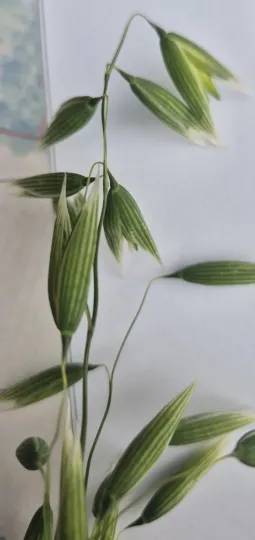
Description
Sowing dates
Common oat (Avena sativa L.) belongs to the Poaceae family and is a globally significant cereal crop, primarily used for animal feed and human consumption. It is highly valued for its nutritional profile and adaptability to temperate climatic zones.
Sowing typically begins in early spring, as soon as the soil can be worked. Oats are a cool-season crop, exhibiting excellent cold tolerance, allowing them to germinate at soil temperatures as low as +2°C to +3°C.
The seeding rate varies depending on the region and soil conditions, usually ranging from 120 to 180 kg per hectare. Proper planting depth, generally between 3 and 5 cm, is crucial to ensure deep-rooted plant development and stability.
Early sowing is beneficial as it allows the crop to establish a deep root system and maximize water uptake before the onset of summer heat. This early start is a fundamental agronomic strategy to ensure uniform field emergence and growth.
Seed treatment with fungicides is a standard procedure to prevent early-stage soil-borne diseases. Ensuring high-quality, certified seed usage at planting significantly impacts the uniformity and final potential of the oat stand.
Growing requirements
Oats are notoriously moisture-demanding, particularly during the critical stages of tillering, booting, and heading. Adequate soil moisture throughout these phases is essential for achieving high grain fill and robust biomass.
The crop thrives in a wide range of soil types, including loams and even some peat-based soils. Oats are moderately tolerant of acidic soil conditions, often performing better than other cereals in low pH environments, though optimal results are seen between pH 5.0 and 6.5.
The ideal temperature range for oat growth is between +15°C and +20°C. They do not perform well under extreme heat or drought, which can lead to premature ripening, shriveled grain, and significant yield losses.
Nutrient management should focus on a balanced application of nitrogen, phosphorus, and potassium. Phosphorus is particularly vital during the early establishment phase, while nitrogen application must be carefully timed to avoid lodging caused by excessive vegetative growth.
Agronomic management involves effective weed control, as young oat plants are sensitive to competition from aggressive weeds. Integrated weed management, including crop rotation and the use of selective herbicides, is essential for maintaining crop health.
Yield
The yield of Avena sativa is highly dependent on management practices and environmental factors. In intensive farming systems, yields can reach 6 to 8 tonnes per hectare, though average regional yields typically range between 3 and 5 tonnes.
The quality of the harvested grain is determined by the fill rate during the grain-filling stage. Environmental stability during this period helps produce plump, heavy grains with a lower percentage of husks, which is highly preferred by the processing industry.
Economic viability is supported by the versatility of the crop. Apart from high-value grain production for food, oats provide highly digestible forage and straw, which are in constant demand in the livestock industry for cattle and horses.
The rotation value of oats is significant, as they serve as an excellent break crop in cereal rotations. They contribute to breaking pest and disease cycles and improve the overall soil structure, providing benefits for the following crop in the sequence.
Optimizing yields requires attention to detail throughout the growing season, from precision seeding to meticulous nutrient management. High-yield outcomes are the result of combining genetic potential with superior soil and water management strategies.
Main diseases and pests
Managing biotic threats is essential to maintain production levels in oat fields. Fungal diseases are among the most common risks, often appearing in conditions of high humidity or poor field drainage.
Commonly encountered diseases include:
- Loose smut (Ustilago avenae);
- Pythium root rot;
- Anthracnose;
- Helminthosporium leaf spot;
- Rhizoctonia;
- Peronospora and root rot.
Pest management is equally important, with species like the cereal leaf beetle (Oulema melanopus) being the primary concern. These insects damage leaf tissues, significantly reducing the plant's capacity for photosynthesis.
While some pests like the cabbage moth or pea pod borer are not primary oat pests, they may occasionally impact the field ecosystem. Regular scouting is required to monitor population levels and apply control measures only when economic thresholds are met.
Cultural practices, such as choosing resistant varieties and ensuring proper field sanitation, form the first line of defense. Chemical control measures, including systemic fungicides and insecticides, should be used judiciously as part of an integrated management plan.
Harvesting
Harvesting timing is critical to minimize losses from grain shattering. The ideal time for harvesting is during the wax ripeness stage, when grain moisture content typically falls within the 16-20% range.
Depending on the climatic conditions, farmers may choose between swathing (two-stage harvesting) or direct combining. Swathing is often preferred if the crop matures unevenly or if there is a significant weed presence, as it allows for uniform drying.
Direct combining is common in dry, stable climates. Proper calibration of the threshing unit is crucial; because oat grains are delicate, high-speed drum settings can cause physical damage, which lowers the quality and germination rate of the seeds.
Post-harvest handling is the final link in the production chain. Grain must be dried and cleaned to storage moisture levels (usually around 14%) to prevent the development of mold or heating, which could degrade grain quality in storage.
Efficient logistics and well-maintained storage facilities are essential to preserve the value of the harvested crop. Timely processing ensures the highest market price and meets the strict quality requirements of the food and feed industries.
In brief
25
Crop diseases
3
Crop pests
Content graph
Crop diseases · 25
AnthracnoseBacterial wiltErgotFusarium wiltHelminthosporium leaf spotHemicycliophora diseaseLoose smutMexican oat cyst nematodeOat blue dwarfOat mosaicOat necrotic mottlePeronosporosisPink root rotPlant RustPowdery mildewPythium root rotPythium root rotRhizoctonia root rotRing nematodeRoot-knot nematodeSeptoriaSharp EyespotSpiral nematodeStunt nematodeTake-all root rot
Content graph
Crop pests · 3
Content graph
Connections · Common oat
Most often together:
Marketplace

