
Description
Symptoms
Initial symptoms include the appearance of pale green or yellow chlorotic spots and streaks, which eventually progress into necrotic tissue.
Over time, the necrotic areas coalesce, leading to significant dieback of the leaf tissue and a reduction in the photosynthetic capacity of the plant.
Infected plants typically exhibit stunted growth, reduced height, and a generally sickly appearance compared to healthy neighboring plants.
Leaf twisting and deformation are commonly observed in advanced stages of infection, particularly on the newly emerging leaves.
During the grain-filling stage, the infection often results in poor panicle development, leading to empty or shriveled, low-weight grains.
Pathogen
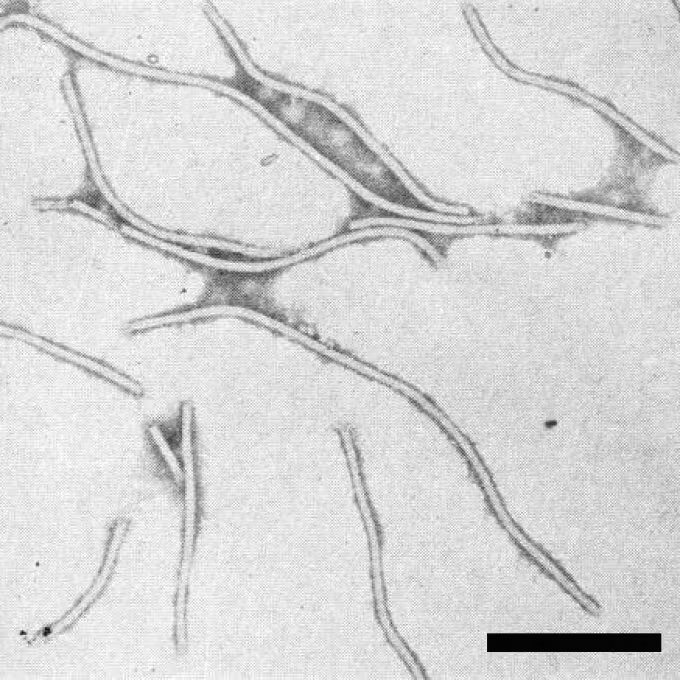
Oat necrotic mottle is caused by the Oat necrotic mottle virus (ONMV), which is a member of the Potyviridae family of plant viruses.
The virus primarily affects oat crops (Avena sativa) and is known for causing characteristic chlorotic and necrotic symptoms on the leaves.
Transmission of the virus occurs mainly through eriophyid mites, which act as vectors by carrying the virus from infected to healthy plants.
As an obligate intracellular pathogen, the virus relies on the host's cellular machinery to replicate, causing systemic infection throughout the plant.
The persistence of the virus in overwintering grasses and crop residues constitutes a major challenge in managing the disease in agricultural landscapes.
Conditions for development
The development and spread of the disease are heavily dependent on the population dynamics of the eriophyid mite vectors in the field.
Warm and humid weather conditions during the early spring encourage the rapid migration of vectors from reservoir hosts to young oat seedlings.
Fields situated near unmanaged grasslands or weedy borders are at a higher risk, as these areas serve as primary sources of the virus.
Dense crop stands can facilitate the movement of vectors and the rapid spread of the virus within the field, accelerating the infection cycle.
Environmental stresses, such as drought or temperature fluctuations, can further weaken plant defenses and exacerbate the severity of the symptoms.
Why it matters
The primary economic impact of Oat necrotic mottle is the substantial reduction in total grain yield due to impaired plant metabolism.
Infected crops produce inferior quality grain, which often fails to meet market standards for weight and nutritional composition.
Increased susceptibility to secondary pathogens is a major concern, as the weakened plant cannot effectively fend off opportunistic infections.
The lack of uniform maturation across the field complicates the harvest process, leading to higher labor costs and potential grain loss.
Given the lack of direct curative measures for viral infections, the impact of the disease can result in significant financial losses for producers.
Protection
The most effective strategy for managing Oat necrotic mottle is the use of high-quality, virus-free seed sourced from reputable suppliers.
Implementing rigorous weed control practices is essential to remove alternative hosts that harbor the virus and the mite vectors.
- Maintaining adequate spatial isolation from previous oat or grass crops.
- Practicing crop rotation to break the cycle of viral persistence.
- Removing volunteer plants that may act as bridges for the virus.
Application of acaricides may be warranted in high-risk areas to suppress vector populations during the early vegetative stages.
Breeding and planting resistant or tolerant oat varieties represent the most sustainable approach to long-term disease management.
Pathogens and affected parts
Affects crops · 1
Discussion
No discussions yet — be the first.