
Slender oat
Avena barbata Pott ex Link
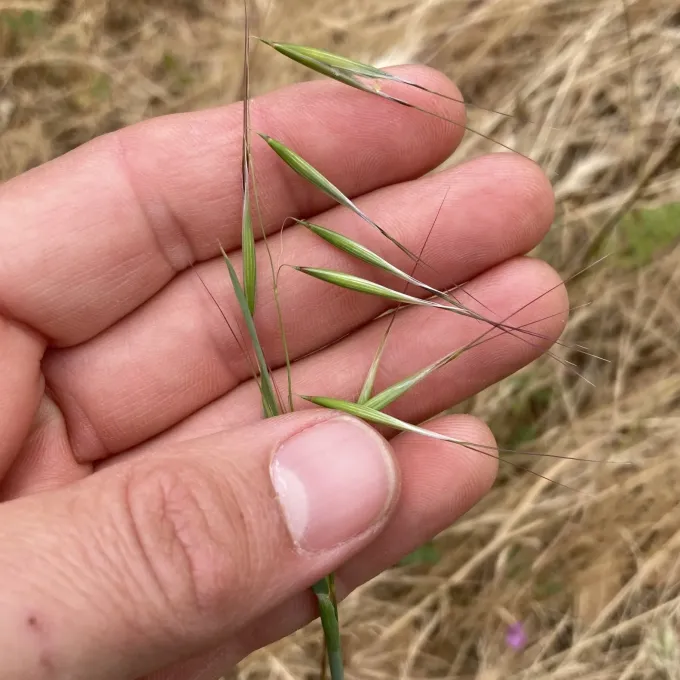
Description
Sowing dates
Avena barbata, commonly known as slender oat, is an annual grass species within the Poaceae family, widely distributed in Mediterranean-type climates.
The seeds typically germinate following the first significant autumn rains, taking advantage of the mild winter temperatures for seedling establishment.
In agricultural settings, sowing is best timed to coincide with the onset of the wet season to ensure sufficient moisture for initial root development.
The species exhibits rapid early growth, which allows it to outcompete weeds and establish a dense canopy before the arrival of the dry season.
High seed viability and vigorous germination rates are characteristic traits that ensure the persistence of the species in various disturbed habitats.
Growing requirements
Slender oat thrives in well-drained soils, showing a particular preference for loamy and slightly rocky substrates common in its native range.
It displays remarkable plasticity regarding soil chemistry, tolerating a range of pH levels and demonstrating moderate salt tolerance.
The plant requires adequate sunlight for optimal growth but can maintain productivity even under conditions of partial shading.
It is well-adapted to the high-temperature fluctuations characteristic of open grasslands and agricultural peripheries.
Effective management involves ensuring consistent soil fertility, though the plant is notably efficient at surviving in low-input environments.
Yield
The primary agricultural value of Avena barbata lies in its role as a forage source during the early growing season.
Biomass production is significant, particularly when moisture levels are consistent throughout the winter and early spring months.
Nutritional quality is highest during the vegetative stage, providing essential crude protein for livestock before the onset of lignification.
The plant is considered an important resource for improving natural rangelands, where its ability to self-seed ensures long-term cover.
Productivity metrics are highly dependent on climatic conditions and site-specific soil characteristics, making site selection crucial.
Main diseases and pests
Slender oat is susceptible to various fungal pathogens, including rusts and powdery mildew, especially under humid spring conditions.
Root rot infections can cause significant stand thinning, particularly in poorly drained or waterlogged field patches.
Insect pests, such as cereal aphids and shoot flies, pose a threat by damaging foliage and potentially transmitting plant viruses.
Overgrazing during the critical flowering stage can severely impact seed set and the regenerative potential of the population.
Integrating crop rotation and utilizing resistant varieties are standard practices to minimize the impact of common cereal diseases.
Harvesting
Harvesting for green fodder is most effective during the late tillering or early booting stages to maximize nutritional density.
Management of grazing intensity is vital to allow the plant sufficient time to recover and complete its reproductive cycle.
Seed harvest requires careful timing to mitigate losses from natural shattering, which is a common trait of the genus Avena.
Post-harvest handling of grain requires cool, dry storage conditions to maintain high viability for subsequent planting seasons.
The plant contributes positively to soil health by leaving behind substantial root biomass, which aids in soil structure stabilization.