
Short oat
Avena brevis Roth
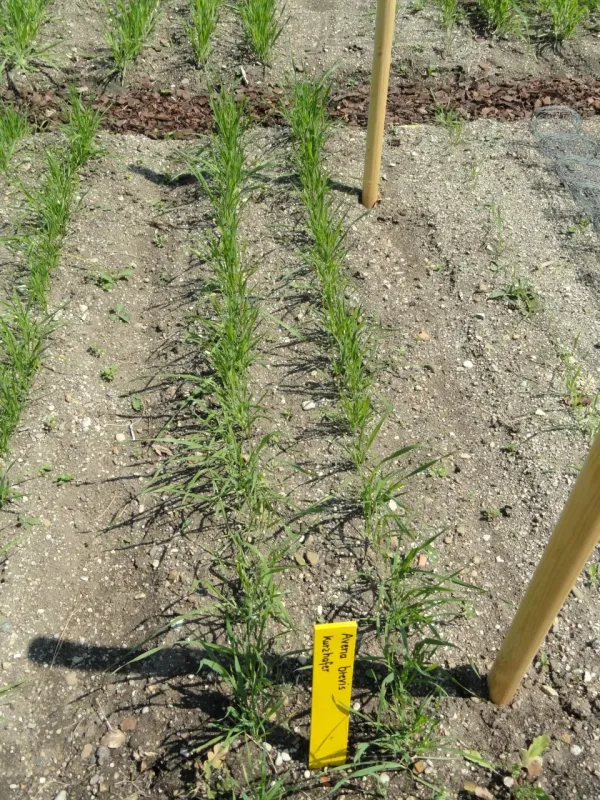
Description
Sowing dates
Short oat (Avena brevis Roth) belongs to the Poaceae family. This annual grass is typically sown during early spring, as soon as the soil is dry enough for cultivation.
The crop is characterized by rapid seed germination, allowing it to compete effectively with weeds in the early stages of development. Early sowing ensures better utilization of moisture reserves in the soil.
In regions with mild climates, winter sowing is possible, although the spring form remains the standard for this species. The optimal seeding depth is 3–5 centimeters, depending on the soil texture.
Seeding density should be sufficient to form a dense stand, as the plant has a strong tendency to tiller. The recommended seeding rate is calculated based on whether the crop is intended for grain or green fodder.
Adhering to sowing dates is critical to prevent lodging during the grain-filling stage, as the stems of this species may be less resistant to wind damage compared to common oats.
Growing requirements
Short oat is a typical temperate crop that demonstrates high resistance to adverse environmental conditions. It thrives on poor, sandy, and even slightly acidic soils where other cereals fail to produce.
The crop possesses good drought tolerance, although the highest yields of biomass and grain are formed under moderate temperatures and sufficient rainfall during the first half of the vegetative period.
Fertility requirements for this species are lower than those for common oat (Avena sativa). The plant performs best in loam and sandy loam soils with adequate aeration.
Sunlight is essential for the development of generative organs. Lack of sunshine during the jointing phase leads to delayed heading and reduced quality of the final harvest.
Agronomic management includes applying minimal doses of nitrogen fertilizers, which promote vegetative growth; however, excessive nitrogen can increase the risk of lodging.
Main diseases and pests
Among the major diseases of the crop are smut fungi, which attack the panicles and significantly reduce germination and seed quality during storage.
The plant can be susceptible to rust, especially in years with high air humidity during the summer. Prevention involves seed treatment before sowing and strictly following crop rotation.
Pests such as the frit fly and cereal leaf beetle can damage young shoots and leaves. Regular monitoring of the fields during the two-to-three leaf stage allows for timely chemical control measures.
Root rots pose a serious threat if agronomic rules are violated, particularly when planting after poor preceding crops. Maintaining a 3–4 year interval before returning the crop to the same field helps minimize risks.
For weed management, both mechanical cultivation and selective herbicides are used, to which the crop shows sufficient tolerance if applied at the correct rates.
Harvesting
Harvesting Short oat for grain is carried out at the full maturity stage when grain moisture drops to 14–16%. At this point, the panicle turns a characteristic golden or light color.
If the goal is to obtain green fodder or hay, harvesting begins at the panicle emergence or early flowering stage. At this time, the plant has its maximum nutritional value and protein content.
Mowing the green mass is done with specialized mowers followed by wilting in swaths. This preserves the vitamin content and ensures optimal moisture levels for silage.
For direct combining, it is necessary to adjust threshing clearances to avoid damaging the grain coat, which can be quite fragile in this species.
Post-harvest processing includes cleaning the grain of impurities and drying it in ventilated warehouses to a state suitable for long-term storage without the risk of mold growth.