
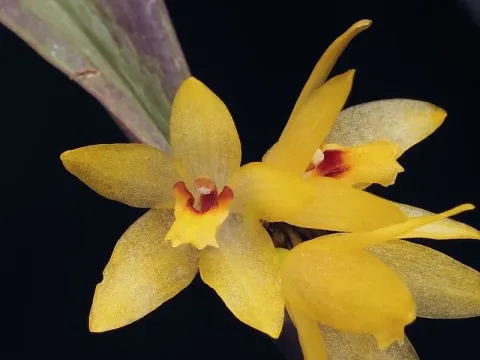
Octomeria
Octomeria
Octomeria is a diverse genus of epiphytic plants within the Orchidaceae family. Native to tropical regions of Central and South America, these orchids typically thrive in humid cloud forests, where they grow attached to tree trunks or rocky surfaces at various altitudes.
What the section contains


Octomeria
The botanical structure of Octomeria is characterized by a sympodial growth habit. Each stem (ramicaul) is typically topped with a single, stiff, leathery leaf. These plants do not possess traditional pseudobulbs in the sense of storage organs but rather produce slender, vertical growths that form dense clumps over time.
Successful cultivation requires high ambient humidity, ideally maintained between 60% and 80%. As epiphytes, these plants are highly sensitive to root suffocation. Therefore, they should be mounted on cork bark or grown in baskets with a very coarse, airy substrate like fir bark and charcoal.
Temperature management is critical for the survival of the plant. While most species prefer intermediate to cool conditions, it is essential to ensure a distinct drop in night temperatures. This thermal fluctuation is a primary trigger for the blooming cycle in many species within the genus.
Light intensity should be kept moderate to bright but strictly diffused. Direct, harsh sunlight will cause leaf desiccation and sunburn. Adequate air circulation is non-negotiable; stagnant air is a primary factor leading to physiological stress and vulnerability to pathogens in this orchid genus.
Octomeria is prone to common orchid pests such as spider mites and scale insects, which often appear when the plant is kept under stressed or overly dry conditions. Regular mechanical removal and the use of insecticidal soaps are recommended for early infestations.
Root rot remains the most common threat, usually caused by overwatering or using a medium that has decomposed and lost its porosity. To prevent this, ensure that the roots are allowed to dry out slightly between waterings and keep the crown of the plant free from standing water.