
Octomeria concolor
Octomeria concolor
Description
Growing requirements
Octomeria concolor is a miniature epiphytic species belonging to the Orchidaceae family. Native to the tropical forests of Brazil, this orchid typically grows on tree branches, where it receives moderate light and high levels of ambient moisture throughout the year.
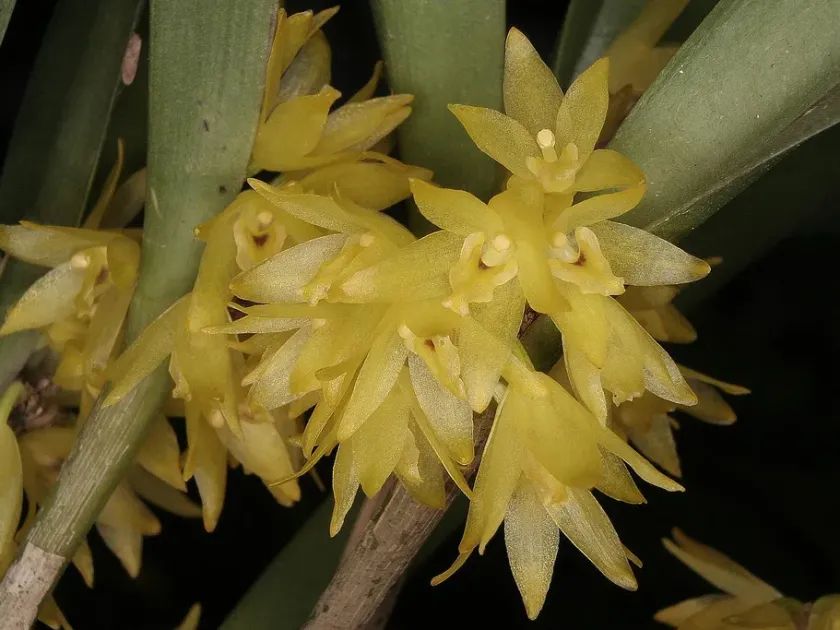
The plant exhibits a sympodial growth habit, creating dense clusters of upright stems. Its leaves are narrow, rigid, and leathery, designed to conserve water efficiently. The flowers are small, greenish-yellow, and emerge from the base of the leaves, offering a unique aesthetic for specialized orchid collections.
Cultural requirements involve maintaining a temperature range between 18°C and 24°C. A consistent temperature drop at night is crucial to simulate the natural environment of the Brazilian highlands and to trigger the flowering process, which is a hallmark of this species.
Regarding moisture and soil, Octomeria concolor requires high humidity, ideally between 70% and 85%. It thrives when mounted on cork bark or grown in small baskets with a very open, porous medium such as fine fir bark and charcoal to ensure rapid drainage and airflow.
Lighting should be bright but indirect. Direct sunlight can easily damage the leathery foliage, causing brown scorch marks. Using a light meter or observing leaf color—which should be a healthy olive green—can help determine the best placement within the growing area.
Main diseases and pests
The primary threats to Octomeria concolor are related to water management and environmental hygiene. Overwatering in cooler temperatures is the most common cause of root rot, which can quickly spread through the sympodial clusters and kill the entire plant.
Pest infestations such as spider mites, scale insects, and mealybugs are significant threats. These pests thrive in dry environments and often hide in the tight junctions between the leaves and the stems, making them difficult to detect until the plant shows signs of damage.
Biological control methods are preferred, but in cases of severe infestation, targeted insecticidal treatments are necessary. It is important to avoid applying oil-based sprays to sensitive orchid foliage as they can block stomata and disrupt respiration.
Bacterial spot diseases can occur if the foliage remains wet for extended periods, especially in poorly ventilated environments. Improving air movement with a small fan is a highly effective way to prevent the formation of stagnant, disease-prone microclimates.
Regular maintenance, including the removal of dead or shriveled pseudobulbs, helps in keeping the plant healthy. Clean, sanitized tools should be used for all trimming to prevent the transmission of pathogens between different parts of the collection.