
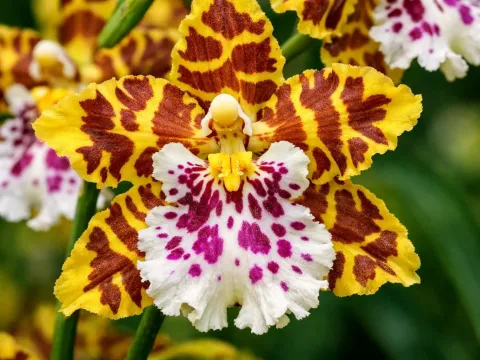
Oncidium
Oncidium Sw.
Oncidium (Oncidium Sw.) is a diverse genus of epiphytic and lithophytic plants belonging to the Orchidaceae family. Native to tropical and subtropical regions of the Americas, these plants have evolved specialized structures to thrive in variable humidity conditions.
What the section contains


Oncidium
The botanical structure of the Oncidium is defined by sympodial growth and the development of pseudobulbs. These organs are essential for storing water and nutrients, which allows the plant to survive during periodic droughts in their natural habitats.
Successful cultivation requires a precise balance of light, temperature, and ventilation. Oncidiums demand high levels of bright, indirect light; insufficient light results in stunted growth and a failure to produce blooms, while excessive direct light causes heat stress.
The choice of substrate is a critical agronomic factor. Growers typically utilize pine bark mixes that provide excellent drainage and airflow. Because the root system is highly sensitive to hypoxia, the medium must remain loose and well-aerated throughout the entire growing season.
Temperature management is another essential component of orchid production. Most Oncidium species require a significant drop in nighttime temperatures to trigger the development of flower spikes. This thermal variance simulates their natural environment and is vital for plant productivity.
The most significant agronomic threats to Oncidiums involve pathogens caused by overwatering or poor air circulation. Root rot and stem rot are common outcomes when plants remain in waterlogged substrates for extended periods, necessitating careful irrigation timing.
Insect pests, particularly spider mites, are a frequent problem in low-humidity conditions. These pests feed on the cellular sap, resulting in discolored and damaged foliage, which significantly weakens the overall health of the plant.
Mealybugs represent a persistent challenge for commercial and hobby growers. They often hide in tight leaf axils and within the pseudobulb crevices, making them difficult to detect and eradicate without thorough and frequent monitoring.
Thrips can severely damage the aesthetic value of the flowers by causing deformity and discoloration. Integrated pest management strategies, including the use of targeted biological controls and periodic insecticide application, are required to manage outbreaks.
Viruses represent a non-curable threat in orchid cultivation. Once a plant is infected with viruses like Cymbidium Mosaic Virus, it must be destroyed to protect the rest of the crop. Strict sanitation protocols during pruning and repotting are the only effective preventive measures.