
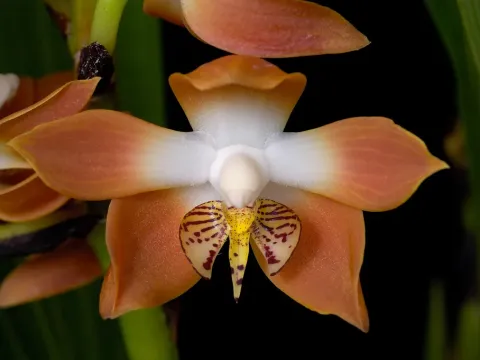
Neomoorea
Neomoorea
Neomoorea is a monotypic genus of epiphytic orchids belonging to the Orchidaceae family. It is native to the tropical forests of Panama and Colombia, where it typically grows as an epiphyte on tree trunks in low-altitude, high-humidity regions.
What the section contains

Neomoorea
Botanically, Neomoorea is recognized by its large, ovoid pseudobulbs that support broad, plicate leaves. The plant exhibits a sympodial growth habit, characteristic of many large tropical orchids, and requires sufficient space to thrive in cultivation.
Regarding climatic requirements, Neomoorea demands warm temperatures year-round. It does not tolerate cold drafts or sudden drops in temperature, which can inhibit its growth and flowering potential in a domestic or greenhouse environment.
Lighting should be bright but filtered. Intense direct sunlight must be avoided to prevent thermal damage to the leaves. Proper light exposure is essential for the maturation of the pseudobulbs, which in turn supports future blooming.
The substrate must be highly permeable, as Neomoorea roots require significant airflow. A mixture of pine bark, charcoal, and sphagnum moss is commonly recommended to balance moisture retention with the necessary drainage properties.
The primary threats to Neomoorea include root rot and fungal infections, usually caused by stagnant moisture around the roots. Ensuring a well-draining potting medium is the most effective preventative measure against these issues.
Pests such as spider mites and mealybugs are the most common adversaries for this orchid. These insects often thrive in environments with low air circulation and low relative humidity, quickly compromising the plant's health.
Soft-scale insects can also manifest on the pseudobulbs, requiring manual removal or specific horticultural oil treatments. Regular monitoring of the plant's foliage is critical for early detection of any infestations.
Bacterial spots on the leaves can develop if water accumulates in the leaf axils for extended periods. Maintaining proper ventilation and careful watering techniques will significantly minimize this risk for the grower.
Integrating a balanced fertilization program helps maintain the plant’s vigor, making it more resilient against environmental stresses and potential pest attacks throughout the growing season.