
Knema
Knema
Knema is a genus of evergreen trees and shrubs belonging to the Myristicaceae family. These plants are native to the tropical forests of South and Southeast Asia, ranging from India across to the Philippines and Indonesia.
What the section contains
 Knema conferta
Knema conferta
Knema conferta
 Knema furfuracea
Knema glauca
Knema glauca
Knema furfuracea
Knema furfuracea
Knema glauca
Knema glauca
 Knema globularia
Knema globularia
Knema globularia
 Knema hookeriana
Knema hookeriana
Knema hookeriana
 Knema intermedia
Knema intermedia
Knema intermedia
 Knema laurina
Knema malayana
Knema malayana
Knema mandaharan
Knema mandaharan
Knema sumatrana
Knema sumatrana
Knema laurina
Knema laurina
Knema malayana
Knema malayana
Knema mandaharan
Knema mandaharan
Knema sumatrana
Knema sumatrana
 Narrow-leaved Knema
Knema angustifolia
Narrow-leaved Knema
Knema angustifolia
Knema
The culture thrives in humid tropical climates characterized by year-round high temperatures and heavy rainfall. They require deep, nutrient-rich, and well-draining soils to prevent waterlogging, which is a major physiological constraint for many species within this genus.
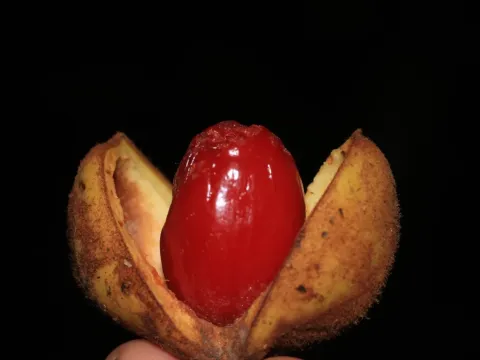
Botanically, Knema is identified by its leathery, often aromatic leaves and small, unisexual flowers. The fruit is a fleshy, dehiscent capsule that splits open at maturity to reveal seeds enclosed in a brightly colored aril, which serves as an attractant for seed-dispersing animals.
In terms of propagation, seeds of Knema are notoriously recalcitrant, meaning they quickly lose viability after harvest. Successful cultivation requires fresh seeds to be sown immediately in a protected environment with controlled moisture levels to ensure proper germination.
Economically, several species of Knema are valued for the fats contained in their seeds. These plant-derived butters are traditionally used in local cosmetic formulations, soap making, and occasionally as specialized technical lubricants due to their stable solid consistency at room temperature.
Pathogenic fungi represent the most significant threat to Knema populations, especially in nursery settings where stagnant air and high humidity promote the development of root rots and leaf blights. Such infections can decimate young seedlings within a short period.
Insect pests, including various stem borers and foliage-feeding caterpillars, pose a constant challenge to the plant's health. Heavy infestations often occur when the plants are already stressed by unfavorable soil conditions or irregular rainfall patterns.
Habitat loss due to large-scale deforestation and the conversion of tropical forest lands into monoculture plantations has severely fragmented the populations of wild Knema. This loss of biodiversity limits genetic resilience and exposes remaining individuals to greater environmental risks.
Climate-driven stressors, such as uncharacteristic seasonal droughts, significantly hinder fruit development and seed filling. Such meteorological events weaken the trees, making them more susceptible to opportunistic pathogens that would otherwise not affect a healthy individual.
Management of these threats in a cultivated or semi-wild context relies on maintaining adequate forest cover and implementing strict sanitation practices. Integrated pest management strategies are preferred to minimize the impact of chemicals on the sensitive tropical ecosystem.