
Myristica buchneriana
Myristica buchneriana
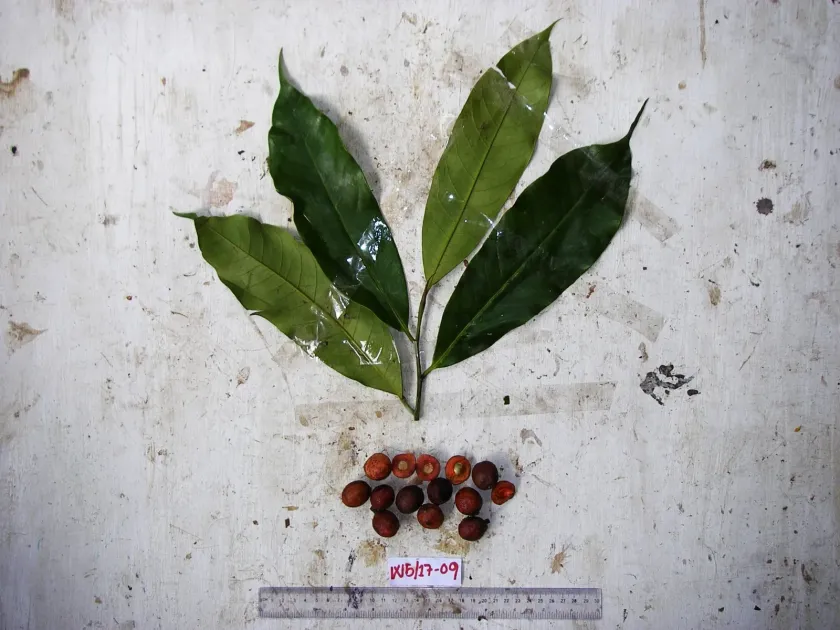
Description
Growing requirements
Myristica buchneriana is an evergreen tree species belonging to the Myristicaceae family. It is native to the tropical rainforests of Africa, thriving in environments characterized by stable high temperatures and abundant year-round rainfall.
The culture requires deep, nutrient-rich soils that possess excellent drainage capabilities. Due to its susceptibility to root rot, farmers must ensure that the cultivation sites are not prone to waterlogging or high water tables.
Climatic requirements focus on high relative humidity, which is essential for the tree's physiological processes. It is highly sensitive to frost and cold winds, making it suitable only for specific microclimates within the tropical zone.
Botanically, the tree features dense foliage and leathery leaves designed for low-light forest floor conditions. Its reproductive system involves the production of fleshy fruits that house seeds rich in aromatic oils.
The primary agricultural utility of this species is in the spice industry and the extraction of essential oils, making it a valuable target for sustainable forestry and plantation management in its native regions.
Main diseases and pests
Fungal infections are the most significant threat to Myristica buchneriana, particularly when humidity levels remain excessively high for extended periods, leading to leaf blight and fruit decay.
Pest pressure often comes from tropical coleoptera and scale insects, which target the bark and tender shoots, potentially reducing the tree's lifespan and fruit yield significantly.
Maintaining proper tree spacing is a critical cultural practice, as it enhances airflow and light penetration, effectively reducing the proliferation of fungal spores.
Regular sanitation programs, involving the removal of dead branches and fallen fruits, are essential to prevent the accumulation of pathogen inoculum in the orchard.
Integrated pest management strategies focusing on biological control agents are highly recommended to maintain the quality of the harvested produce while protecting the local ecosystem.